

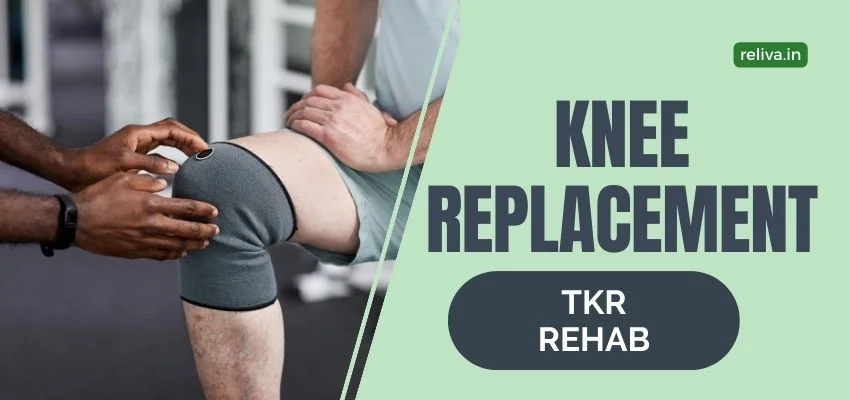

Knee replacement surgery recovery typically takes 3 to 6 months for most daily activities, with continued improvement up to one year depending on rehabilitation and physiotherapy.
————————————————————————————————–
Living with chronic knee pain can slowly change the way a person moves, thinks, and even plans their day. Activities that once felt effortless, such as walking short distances, standing for a while, or climbing stairs, begin to require planning and effort. Over time, the discomfort is not just physical. It begins to affect confidence, independence, and overall quality of life.
When conservative treatments no longer provide relief, knee replacement surgery becomes a medically recommended option. While the surgery itself is an important step, it is only one part of the overall journey. The real transformation happens during recovery and rehabilitation. Many individuals reach this stage after a long knee pain recovery journey where conservative treatments no longer provide relief.
Understanding the full journey of knee replacement surgery recovery helps set the right expectations. It allows individuals and families to prepare not only for the procedure, but also for the structured rehabilitation that follows, which plays a critical role in long term outcomes.
When Do You Need Knee Replacement Surgery?
Knee replacement is usually considered when the joint has undergone significant structural damage and symptoms begin to interfere with daily life in a consistent manner. The most common cause is osteoarthritis, where the protective cartilage in the knee gradually wears down. Other conditions such as rheumatoid arthritis, long standing inflammation, or previous injuries can also lead to joint degeneration.
People often reach this stage after trying multiple non-surgical knee pain treatment options such as medications, injections, or lifestyle modifications without sufficient improvement. Pain may be present even during rest. Stiffness may make it difficult to bend or straighten the knee. Swelling may occur repeatedly, and walking even short distances may feel tiring or unstable.
In such cases, knee replacement is not just about reducing pain. It is about restoring function and allowing a person to return to a more independent and active life.
What Are the Types of Knee Replacement Surgery?
The type of surgery recommended depends on how much of the knee joint is affected. In a total knee replacement (TKR), the entire joint surface is replaced with artificial components. This is the most commonly performed procedure and is typically advised when damage is widespread across the joint.
In a partial knee replacement (PKR), only the damaged portion of the joint is replaced. This option is suitable for individuals where the degeneration is limited to a specific area of the knee. While recovery may feel slightly quicker in some cases, the decision depends entirely on clinical evaluation and imaging.
It is important to understand that regardless of the type of surgery, the success of the procedure depends heavily on the quality of rehabilitation that follows.
What Is the Recovery Timeline After Knee Replacement Surgery?
The total knee replacement rehab timeline includes early walking within days, improved movement by 6 weeks, and functional recovery by 3 to 6 months.
The actual knee replacement rehab timeline is gradual and varies from person to person. Recovery does not follow a fixed pattern, but there are general phases that help in understanding what to expect. While every recovery is unique, understanding recovery after surgery helps set realistic expectations.

The actual knee replacement rehab timeline is gradual and varies from person to person. In general, here is what to expect after knee replacement surgery-
Week 1–2: Early Recovery After Knee Replacement
The initial phase begins immediately after surgery. Most individuals are encouraged to stand and begin walking with support within the first couple of days. This early movement is important to prevent stiffness and improve circulation.
During this period, the knee may feel swollen, stiff, and sensitive. Movements are limited, and even simple activities may feel challenging. The focus is on gentle mobility, pain management, and gradually introducing controlled movement under supervision.
Week 3–6: Regaining Movement and Strength
As healing progresses, there is a noticeable improvement in comfort during movement. Walking becomes more stable, although support may still be required. Knee bending begins to improve, but stiffness is still present, especially after periods of rest.
This phase requires consistency. This phase can feel slow, but small improvements matter. Regular improvements in movement and strength, even though small, begin to build the foundation for further recovery.
6 Weeks to 3 Months: Improving Function and Confidence
This stage marks a significant shift in recovery. Many individuals begin to feel more confident in their movements. Walking distances increase, and daily activities become easier to manage.
However, the knee may still feel unfamiliar. Strength is still developing, and certain movements may require conscious effort. Continued rehabilitation during this period is essential to avoid plateaus in progress.
3 to 6 Months: Returning to Normal Activities
By this time, most individuals regain a good level of independence. Walking becomes smoother, balance improves, and the knee starts to feel more natural.
Even though visible recovery appears complete, internal healing and strength building continue. Maintaining a structured rehabilitation approach during this phase helps in achieving long term success.
A structured post operative physiotherapy plan plays a critical role in ensuring steady and safe progress through each stage.
Start your knee replacement recovery with expert physiotherapy support.
Why Is Physiotherapy Important After Knee Replacement Surgery?
The role of knee replacement physiotherapy cannot be overstated. Surgery addresses the damaged joint, but it does not automatically restore movement, strength, or coordination. These functions need to be rebuilt carefully and progressively over time.
At ReLiva Physiotherapy and Rehab, rehabilitation is approached in a structured and personalised manner. A physiotherapist evaluates the individual’s condition, pain levels, mobility, and recovery goals before designing a guided rehab program that evolves with progress.
The focus goes beyond just exercises. It includes improving joint mobility, rebuilding muscle strength, correcting walking patterns, and helping individuals regain confidence in movement. Recovery story of patients like Visha Patel in Navsari, Gujarat who initially experienced pain, stiffness, and difficulty with walking, standing, and even simple movements such as bending the knee or getting up from a chair, often benefit from this structured approach. With consistent physiotherapy support, clear guidance, and gradual progression, improvements in mobility, strength, and confidence become noticeable over time. In her own words – “I am very happy with the results of my post TKR physiotherapy. Now, I am able to walk much better, perform my daily activities independently and my knee pain has reduced a lot. My flexibility and confidence have also improved significantly.”
Physiotherapy after knee replacement also ensures that recovery progresses safely. Without proper guidance, there is a risk of overexertion or, equally, not moving enough, both of which can delay recovery and affect long term outcomes.
A well guided rehabilitation plan with an experienced physiotherapist at ReLiva Physiotherapy and Rehab, helps in achieving smoother, faster, and more sustainable recovery, enabling individuals to return to their daily routines with greater ease and confidence.
When Should You Start Physiotherapy After Knee Replacement?
Physiotherapy usually begins within the first one to two days after surgery. Early intervention plays a crucial role in preventing complications such as stiffness, poor mobility, and delayed healing.
Starting rehabilitation early helps the body adapt to the new joint. It encourages circulation, reduces swelling, and improves muscle activation. Over time, these early efforts contribute significantly to overall recovery.
Working with a physiotherapist ensures that each stage of recovery is handled appropriately. Movements are introduced gradually, and progression is based on individual readiness rather than a fixed schedule.
Delaying physiotherapy can make recovery more difficult. Stiffness may increase, confidence in movement may reduce, and overall progress may slow down.
To make recovery guidance more accessible, you can also read our Recovery Guide on Do’s and Don’ts After Knee Replacement. It includes videos that help reinforce correct habits in your preferred language.
What Are Common Problems After Knee Replacement Surgery?
Recovery from knee replacement surgery is not always a smooth or predictable process. Many individuals experience certain challenges along the way.
Stiffness is one of the most common concerns. The knee may feel tight, especially after long periods of rest. This can make movement uncomfortable initially.
Swelling may persist for several weeks or even months. While it gradually reduces, it can sometimes affect mobility and comfort.
Pain during movement is also expected, particularly in the early stages. Understanding the difference between normal post surgical discomfort and concerning pain is important.
Another significant challenge is the fear of movement. Many individuals hesitate to use their operated leg fully, which can slow down recovery. Guidance from a physiotherapist helps in building confidence and ensuring safe movement.
Get expert help to overcome stiffness and pain safely
What Exercises Are Done After Knee Replacement Surgery? (Overview)
Exercises form an important part of recovery, but they must be approached carefully. The goal is not to perform a large number of exercises, but to perform the right movements in a structured and controlled manner.
Rehabilitation focuses on improving knee flexibility, strengthening surrounding muscles, and restoring balance and coordination. Each exercise is introduced at the appropriate stage of recovery.
This is an overview. For a stage-wise exercise plan, read our detailed guide on exercises after knee replacement.
Following a guided program ensures that exercises are safe, effective, and aligned with the individual’s recovery stage.
Knee Replacement vs ACL Surgery: How Is Recovery Different?
Knee replacement and ACL surgery are often discussed together, but they serve very different purposes and involve different recovery processes.
Knee replacement is typically performed in individuals with advanced joint degeneration. The focus of recovery is on restoring comfortable movement and daily function.
ACL surgery is usually performed in younger, more active individuals who have suffered a ligament injury. ACL injury Rehabilitation is more focused on stability, agility, and returning to sports or high level activities.
Understanding this difference helps in setting realistic expectations for recovery.
Knee vs Hip Replacement: Which Recovery Is Faster?
Both knee and hip replacement surgeries aim to restore mobility and reduce pain, but their recovery patterns can differ in important ways.
Knee replacement recovery often involves more noticeable stiffness and typically requires consistent physiotherapy to regain full movement. Progress may feel slower, especially in the early stages. In contrast, hip replacement recovery is often smoother, with many individuals regaining mobility a bit faster and experiencing less stiffness early on.
Knee vs Hip Replacement Recovery Comparison
- Pain (early stage):
- Knee replacement: Moderate, may feel more intense initially
- Hip replacement: Often lower and more manageable early
- Mobility recovery:
- Knee replacement: Slower, stiffness can limit movement
- Hip replacement: Faster, smoother return to walking
- Rehab intensity:
- Knee replacement: High, requires structured physiotherapy
- Hip replacement: Moderate, comparatively less intensive
- Range of motion:
- Knee replacement: Takes time to regain full bending
- Hip replacement: Improves more naturally over time
- Return to daily activities:
- Knee replacement: Gradual, may take longer
- Hip replacement: Usually quicker for basic activities
Hip replacement recovery is generally smoother in terms of early mobility. Many individuals find it easier to walk sooner compared to knee replacement.
Despite these differences, both require structured rehabilitation – exercises after hip replacement are essential to achieve the best outcomes.
Real Patient Recovery After Knee Replacement Surgery
Recovery after knee replacement is not just about healing the joint, but about regaining confidence and returning to daily life. Here is a real patient recovery journey.
Amirthavalli Krishnan began her rehabilitation soon after knee surgery with support from ReLiva Physiotherapy and Rehab experts. In the early phase, she was experiencing pain, stiffness, and difficulty moving, which made even simple activities challenging. With consistent guidance from a physiotherapist, her knee rehabilitation was structured and adapted to her needs. The team supported her through difficult phases, helping her stay motivated and gradually improve her knee movement and strength. She quips “They have an excellent team who work together very well, keeping the patient’s rehabilitation as the primary focus.”
Over time, she regained confidence in walking and daily activities. She now shares – “Thanks to my physiotherapist’s guidance and support, I am fully back to normal. I could not have done this without their kind and compassionate approach.”
Her journey reflects an important truth about knee replacement surgery recovery. The outcome depends not just on the surgery, but on the quality and consistency of knee replacement physiotherapy and guided rehabilitation that follows.
Long Term Outcomes
Knee replacement surgery recovery continues beyond the initial few months. While most individuals regain independence within three to six months, long term outcomes depend on maintaining strength, mobility, and an active lifestyle.
A successful knee replacement can significantly reduce pain and improve quality of life. Many individuals return to regular activities and experience a renewed sense of independence.
However, continued attention to movement, strength, and joint care remains important. Physiotherapy guidance can play a role even in the later stages to ensure long term joint health.

FAQs
Q1. When can I walk after knee replacement?
Ans. Most individuals begin walking within one to two days after surgery with support. At ReLiva Physiotherapy and Rehab, a physiotherapist guides the progression of walking after knee replacement in a safe and structured manner, helping improve confidence and stability during knee replacement surgery recovery.
Q2. When can I climb stairs after knee replacement?
Ans. Stair climbing after knee replacement surgery usually becomes possible within a few weeks, depending on strength and balance. A physiotherapist ensures that the correct technique is followed, reducing strain on the knee and supporting safe progression during the total knee replacement rehab timeline.
Q3. Is pain normal after knee replacement?
Ans. Some level of pain and discomfort is normal during recovery, especially in the early stages. At ReLiva Physiotherapy and Rehab, a physiotherapist helps manage pain through guided movement and structured rehabilitation, ensuring steady progress without unnecessary discomfort.
Q4. When can I drive again after knee replacement?
Ans. Driving is usually possible after four to six weeks, depending on recovery and which knee was operated. A physiotherapist assesses strength, control, and reaction ability before advising a safe return to driving as part of knee replacement physiotherapy recovery.
Q5. How long does knee replacement recovery take?
Ans. Knee replacement recovery usually takes around 3 to 6 months for most daily activities, although full recovery and strength may continue to improve for up to a year. With structured guidance at ReLiva Physiotherapy and Rehab, a physiotherapist helps ensure steady progress, better mobility, and a safe return to routine activities during the knee replacement rehabilitation process.
Q6. When can I sit cross-legged after a knee replacement?
Ans. Sitting cross-legged after knee replacement is generally not recommended in the early stages of recovery. It may take several months, and in some cases may not be advised depending on the type of surgery and flexibility achieved. A physiotherapist evaluates mobility and guides safe movement patterns to avoid strain on the replaced knee.
Q7. When can I travel after knee replacement surgery?
Ans. Short-distance travel is usually possible within a few weeks after surgery, while long-distance travel may require waiting for 6 to 8 weeks. A physiotherapist provides guidance on safe positioning, movement breaks, and precautions to reduce stiffness and swelling during travel as part of knee replacement recovery care.
Knee replacement surgery is a significant step towards improving mobility and reducing long-standing pain. However, the journey does not end in the operating room.
Recovery requires patience, consistency, and the right guidance. With a structured rehabilitation plan and support from a qualified physiotherapist, it is possible to regain movement, rebuild strength, and return to a more active and independent life.
The focus should always remain on steady progress, not quick results. Over time, these small, consistent improvements lead to meaningful and lasting recovery.
Consult a physiotherapist at ReLiva Physiotherapy & Rehab
……………..
This article has been reviewed by physiotherapist Dr Dipti Ahirekar. Dr. Dipti Ahirekar (PT) is a top rated physiotherapy expert in Wakad, Pune. With a strong foundation in physiotherapy and rehabilitation, she focuses on helping patients recover from pain, injury, and postural dysfunctions. Her approach blends manual therapy with evidence-based exercise techniques to restore mobility, enhance strength, and improve overall quality of life, making her a trusted name for physiotherapy care in Wakad.
….

