

Medically reviewed by Dr. Dipti Ahirekar (PT) – Updated June, 2026.
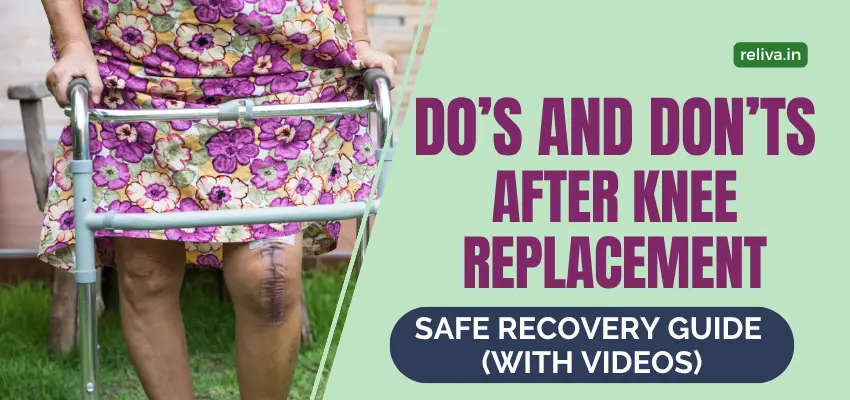
Recovery after knee replacement surgery is not only about exercises. Daily habits, movement patterns, and precautions play an equally important role. Following the right do’s and avoiding common mistakes can help reduce pain, prevent complications, and support faster recovery.
This guide explains what to do and what to avoid after knee replacement surgery, along with expert-led videos for better understanding. Early guidance can significantly improve recovery outcomes.
Before focusing on precautions, it helps to understand the overall recovery journey and timeline. Read our complete guide on knee replacement surgery recovery and rehab timeline.
Why Do’s and Don’ts Matter After Knee Replacement?
After surgery:
- The joint is healing
- Muscles are weak
- Movement patterns need retraining
Small mistakes can:
❌ Increase pain and swelling
❌ Delay recovery
❌ Affect long-term outcomes
Correct habits help:
✔ Improve mobility
✔ Build confidence
✔ Support safe recovery

Do’s After Knee Replacement Surgery
1. Stay Consistent With Physiotherapy
Regular rehabilitation helps restore movement and strength safely. Physiotherapy after knee replacement is essential for guided recovery.
2. Keep Moving (Within Limits)
- Walk regularly as advised
- Avoid prolonged sitting
Movement prevents stiffness and improves circulation.
3. Follow Proper Walking Technique
Use support (walker/stick) as recommended. Gradually improve balance and weight-bearing.
4. Manage Swelling and Pain
- Elevate your leg
- Use ice (if advised)
- Follow medication guidance
5. Maintain Good Posture During Activities
- Sit with support
- Avoid awkward knee positions
6. Progress Gradually
Recovery is not linear. Small improvements matter more than speed.
Don’ts After Knee Replacement Surgery
1. Do Not Overexert
Doing too much too soon can increase pain and swelling.
2. Do Not Ignore sharp or increasing Pain Signals
Pain is feedback. Sharp or increasing pain should not be ignored.
3. Avoid Sitting in One Position for Too Long
This can increase stiffness and discomfort.
4. Avoid Sudden Twisting Movements
These can strain the knee joint during early recovery.
5. Do Not Skip Physiotherapy
Irregular rehab slows progress and affects outcomes.
6. Avoid Comparing Your Recovery With Others
Each recovery timeline is different.
Avoid common recovery mistakes with expert supervision. A physiotherapist can help you follow these correctly based on your recovery stage.
Watch: Do’s and Don’ts After Knee Replacement (Expert Videos)
Watch expert guidance to understand correct techniques and precautions.
🎥 Video 1: Essential Do’s and Don’ts (Marathi)
🎥 Video 2: Common Mistakes to Avoid (Gaujarati)
Daily Activity Precautions After Knee Replacement
Incorrect posture during daily activities is a common cause of delayed recovery. Follow expert guidance and strengthen your path to safe and progressive recovery.
Sitting
- Use a firm chair
- Avoid very low seating
Sleeping
- Keep leg supported
- Avoid awkward twisting
Stairs
- Use support
- Follow correct step pattern
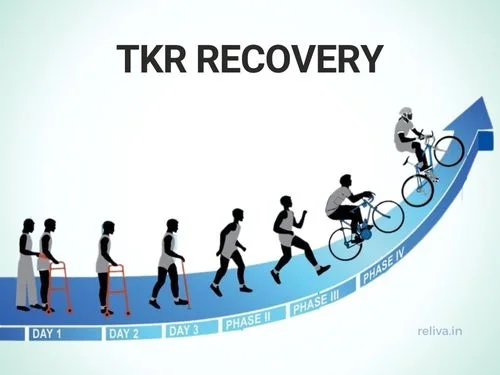
When Can You Return to Normal Activities?
Recovery varies, but generally:
- Walking improves within weeks
- Daily activities by 6–12 weeks
- Full recovery takes a few months
For a detailed stage-wise plan, read our guide on total knee replacement rehab timeline.
How do Do’s & Don’ts connect with Exercises?
Precautions alone are not enough. Combine this with:
- Structured exercises
- Guided physiotherapy
Related Reading: Detailed exercises after knee replacement
Why Supervised Physiotherapy Makes a Difference?
Recovery after knee replacement is not just about following instructions. It requires the right progression at the right time.
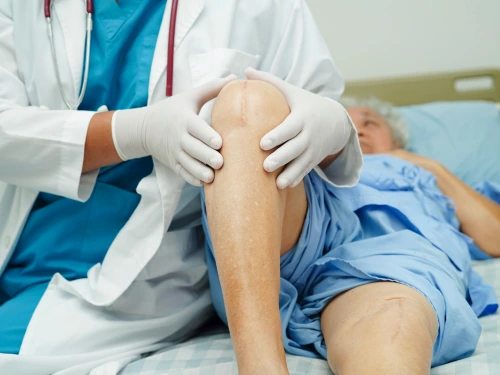
At ReLiva Physiotherapy & Rehab, physiotherapists design personalised rehab plans based on your pain levels, mobility, and recovery stage—helping you recover safely and confidently.
This ensures:
✔ Safe movement
✔ Faster recovery
✔ Better long-term outcomes

FAQs
What should I avoid after knee replacement surgery?
Ans. You must avoid high-impact activities like running or jumping after knee replacement, as these can wear down your new joint. Additionally, avoid deep squatting, kneeling, or twisting your knee suddenly under load. These movements place excessive stress on the implant and should be avoided until explicitly cleared by your surgeon.
How careful should I be after knee replacement?
Ans. After knee replacement, you must balance caution with activity. While protecting the new joint from high-impact movements, falls, or deep twisting is essential, avoiding movement entirely delays recovery. Follow your physiotherapist’s specific safety guidelines to gradually restore strength and mobility while minimizing the risk of complications.
Can I walk normally after knee replacement?
Ans. Yes, the primary goal of knee replacement surgery is to restore your ability to walk normally and pain-free. Most patients achieve a natural, stable gait within 3 to 6 months. Consistent participation in physiotherapy is essential to regain the strength, balance, and range of motion necessary for a smooth, confident stride.
When can I resume normal daily activities?
Ans. The timeline to resume daily activities depends on your specific surgery and recovery progress. Generally, light tasks can begin within weeks, but returning to full, unrestricted movement usually takes 3 to 6 months. Always follow your surgeon’s tailored rehabilitation plan to ensure a safe and successful return to your routine..
What happens if I don’t follow precautions after knee replacement?
Ans. Ignoring post-operative precautions after knee replacement significantly increases your risk of serious complications, including implant loosening, dislocation, or infection. Failure to follow these guidelines can cause permanent stiffness, chronic pain, and limited range of motion, often necessitating revision surgery. Always adhere to your surgeon’s rehabilitation plan to ensure long-term success.
Recovery after knee replacement is not just about healing—it is about building the right habits.
Following the correct do’s and avoiding common mistakes can make a significant difference in how smoothly and quickly you recover.
👉 Start your knee replacement recovery with expert physiotherapy support at ReLiva Physiotherapy & Rehab.
Get a personalised rehab plan designed for your recovery stage.
……………..
This article has been reviewed by physiotherapist Dr Dipti Ahirekar. Dr. Dipti Ahirekar (PT) is a top rated physiotherapy expert in Wakad, Pune. With a strong foundation in physiotherapy and rehabilitation, she focuses on helping patients recover from pain, injury, and postural dysfunctions. Her approach blends manual therapy with evidence-based exercise techniques to restore mobility, enhance strength, and improve overall quality of life, making her a trusted name for physiotherapy care in Wakad.