

Medically reviewed by Dr Sayali Muley (PT) – Updated September, 2026.
Cervical spondylosis is one of the most common causes of persistent neck pain in adults over 40. It refers to age-related wear and tear in the joints, discs, and bones of the cervical spine, producing neck stiffness, pain, and in some cases, arm symptoms or headaches. While the degenerative changes themselves cannot be reversed, the symptoms can be effectively managed. Cervical Spondylosis Physiotherapy is the most evidence-supported treatment, helping patients reduce pain, restore mobility, correct posture, and return to normal daily function without surgery.
|
Cervical Spondylosis: Quick Facts |
|
|
Common age |
Over 40 years |
|
Main symptoms |
Neck pain, stiffness, headaches |
|
Can physiotherapy help? |
Yes, for most patients |
|
Is surgery usually required? |
No, most recover without surgery |
|
Can it be cured? |
Structural changes are permanent, but symptoms can be effectively managed |
|
Recovery |
Most people improve with physiotherapy and lifestyle changes |
On this page
- What Is Cervical Spondylosis?
- Causes of Cervical Spondylosis
- Symptoms of Cervical Pain
- Could It Be Something Else?
- Who Is at Risk?
- Diagnosis
- When Should You Seek Medical Attention?
- Treatment Options
- How Physiotherapy Helps
- Recovery and Exercises
- Preventing Cervical Spondylosis from Getting Worse
- Frequently Asked Questions
What Is Cervical Spondylosis?
Understanding Cervical Spondylosis
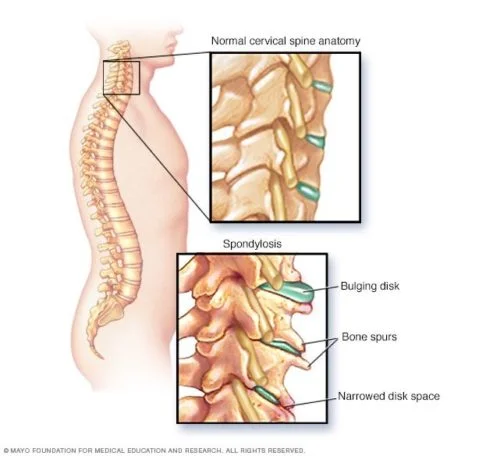
Cervical spondylosis is a broad term for the degenerative changes that occur in the cervical spine (the neck region) as a result of ageing and cumulative wear. These changes include thinning of the intervertebral discs, formation of bone spurs (osteophytes), stiffening of the facet joints, and thickening of the spinal ligaments.
The condition is extremely common. By age 60, radiological evidence of cervical spondylosis is present in the majority of adults, though not all of them experience symptoms. When symptoms do arise, they range from mild neck stiffness to significant pain, restricted movement, and referred symptoms into the arms or head.
Cervical spondylosis is also referred to as cervical osteoarthritis or degenerative disc disease of the neck.
Is Cervical Spondylosis the Same as Neck Arthritis?
Yes, in practical terms. Cervical spondylosis and cervical arthritis describe the same underlying process: the progressive breakdown of the cartilage and joints within the neck. The term “spondylosis” is more specific to the spine and encompasses both the disc degeneration and facet joint arthritis that occur together as the cervical spine ages. For patients, the distinction is less important than understanding that both terms refer to a manageable, non-emergency condition.
What Causes Cervical Spondylosis?
Age-Related Disc Degeneration
The intervertebral discs act as cushions between the vertebrae, absorbing load and allowing movement. With age, these discs lose water content, become thinner and less flexible, and begin to narrow the space between vertebrae. One of the earliest changes is degenerative disc disease. As it progresses, stress on nearby joints increases and contributes to cervical spondylosis.
This narrowing increases stress on the surrounding joints and is the primary driver of cervical spondylosis.
Bone Spurs (Osteophytes)
As the disc space narrows and joint surfaces undergo increased stress, the body responds by laying down extra bone at the edges of the vertebrae. These bony projections (osteophytes) can press against nearby nerve roots or the spinal cord, producing pain, tingling, or weakness.
Facet Joint Arthritis
The facet joints at the back of each vertebral level guide and limit spinal movement. As they degenerate, their cartilage wears down, the joint space narrows, and the joints become stiff and inflamed, contributing to both localised neck pain and restricted movement.
Thickening of Ligaments
The ligaments that stabilise the cervical spine can thicken and stiffen over time, further limiting neck mobility and potentially encroaching on the spinal canal.
Why Modern Lifestyle Can Worsen Symptoms
Structural degeneration may be age-related, but the way we live today accelerates and aggravates it significantly. Prolonged desk work maintains the cervical spine in sustained flexion, placing constant pressure on the anterior disc and facet joints. Mobile phone use (“text neck”) involves hours of daily forward head posture that increases compressive load on the neck by several times the weight of the head. Poor seated posture compounds all of this. These lifestyle factors do not cause spondylosis, but they consistently worsen its symptoms and accelerate its progression.
Symptoms of Cervical Pain owing to Spondylosis
|
Symptom |
Description |
|---|---|
|
Neck pain |
Aching or sharp pain, often worse in the morning or after sustained postures |
|
Neck stiffness |
Reduced range of motion, difficulty turning the head |
|
Shoulder and upper back pain |
Referred pain from the cervical joints and muscles |
|
Headaches |
Arising from the base of the skull, often cervicogenic in origin |
|
Arm pain, tingling, numbness |
Nerve root compression (cervical radiculopathy) |
|
Hand or arm weakness |
Nerve root or spinal cord involvement |
|
Balance problems |
Suggests cervical myelopathy, requires urgent assessment |
Neck Pain
Neck pain in cervical spondylosis is typically a deep, aching discomfort localised to the mid or lower cervical spine. It may be constant or intermittent, and is commonly worse first thing in the morning, after prolonged sitting, or following sustained phone or screen use.
If your symptoms are worse when you wake up, see our article on Neck Pain While Sleeping and the Best Sleeping Position for Neck Pain.
Neck Stiffness
Reduced cervical mobility is one of the earliest and most consistent symptoms. Patients often notice difficulty rotating to check blind spots when driving, looking overhead, or turning the head quickly. Stiffness is typically most pronounced on waking.
If your neck pain is mainly related to prolonged phone or laptop use, read our guide on Text Neck Syndrome.
For Home care, check our guide on Neck pain relief at home
Shoulder and Upper Back Pain
The cervical spine refers pain readily into the shoulder girdle, upper back, and between the shoulder blades. Many patients initially present with shoulder pain that turns out to originate from the cervical spine rather than the shoulder joint itself.
Headaches Starting from the Neck
Cervicogenic headaches arise from the upper cervical joints and muscles and are felt at the base of the skull, behind the eyes, or across the top of the head. They are often unilateral and are reproduced or worsened by neck movement or sustained postures.
Learn more about Headaches starting from the neck in our guide.
Arm Pain, Tingling or Numbness
When a bone spur or herniated disc compresses a cervical nerve root, pain, tingling, or numbness can travel into the arm, forearm, and hand in a dermatomal pattern. This persistent arm pain or tingling is called cervical radiculopathy and requires careful assessment to determine the level of nerve root involvement.
Weakness in the Hands or Arms
Progressive weakness in grip strength or arm movement suggests significant nerve root compression. This warrants prompt assessment and should not be attributed to “normal ageing.”
Balance Problems and Other Warning Signs
Difficulty walking, poor balance, and a feeling of heaviness in the legs may indicate cervical myelopathy, a more serious condition in which the spinal cord itself is compressed. This requires urgent medical review.
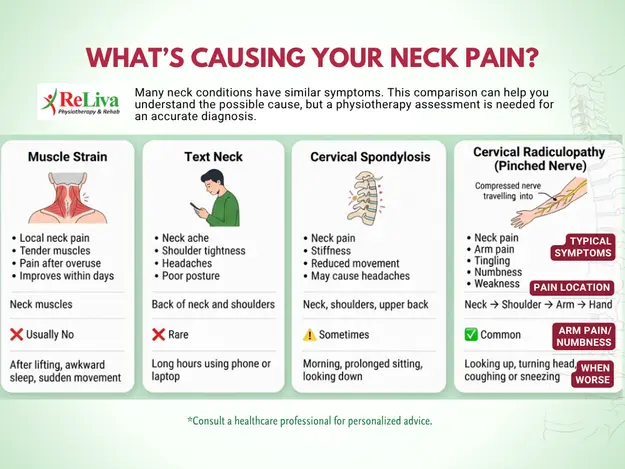
Could My Neck Pain Be Something Other Than Cervical Spondylosis?
|
Condition |
Typical Features |
|
Muscle strain |
Usually short-lived, often after overuse |
|
Text neck |
Related to prolonged device use and posture |
|
Cervical radiculopathy |
Neck pain with arm pain, tingling or numbness |
|
Cervical spondylosis |
Age-related degeneration with stiffness and recurrent pain |
|
Cervical myelopathy |
Balance issues, hand clumsiness, gait changes (urgent assessment) |
Not sure if your neck pain is due to cervical spondylosis?
A physiotherapy assessment can help identify the underlying cause and guide the most appropriate treatment.
Who Is at Risk of Developing Cervical Spondylosis?
Ageing
The single greatest risk factor. Most adults over 50 have some degree of cervical degeneration on imaging, though only a proportion develop significant symptoms.
Sedentary Lifestyle
Inactivity reduces circulation to the spinal structures, weakens the supporting musculature, and allows postural habits to develop that increase cervical load.
Occupations with Prolonged Sitting
Desk workers, drivers, healthcare professionals, and others who sustain fixed neck postures for extended periods are at significantly higher risk of symptomatic cervical spondylosis.
Previous Neck Injuries
A history of whiplash, sports injuries, or any cervical trauma accelerates degenerative changes at the injured segments.
Smoking and Other Lifestyle Factors
Smoking reduces disc nutrition and accelerates degeneration. Obesity increases mechanical load on the spine. Both are independent risk factors for more severe and earlier-onset spondylosis.
How Is Cervical Spondylosis Diagnosed?
Clinical Assessment
Diagnosis begins with a detailed clinical history. A physiotherapist or doctor will assess the nature, location, duration, and behaviour of symptoms, as well as aggravating and relieving factors.
Physical Examination
Physical examination includes assessment of cervical range of motion, palpation of the cervical spine and surrounding muscles, neurological testing (reflexes, sensation, strength), and specific provocation tests to identify nerve root or spinal cord involvement.
X-rays, MRI and Other Investigations
X-rays can show disc space narrowing, osteophytes, and facet joint changes. MRI provides detailed information about disc, nerve root, and spinal cord involvement and is used when neurological symptoms are present or when a specific structural cause needs to be confirmed.
An important principle: imaging findings should be treated as part of the clinical picture, not in isolation. Significant degeneration on an MRI is common in asymptomatic adults. The goal is to treat the patient and their symptoms, not the scan.
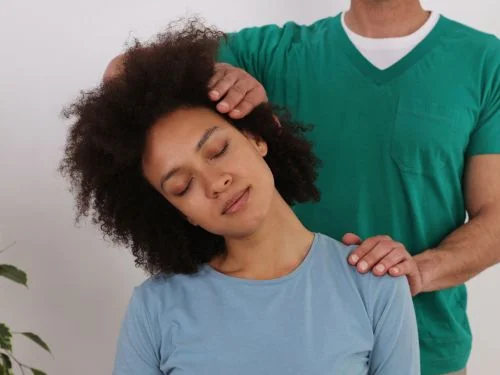
When Should You Seek Medical Attention for Cervical Pain?
Red Flag Symptoms That Should Not Be Ignored
Seek urgent medical assessment if you experience any of the following:
- Progressive arm or hand weakness that is worsening over days or weeks, not just discomfort.
- Difficulty walking or poor coordination in the legs, which may suggest the spinal cord is compressed (cervical myelopathy).
- Loss of balance or unexplained falls associated with neck symptoms.
- Bladder or bowel changes alongside neck symptoms, including urgency, incontinence, or retention. This is a red flag requiring immediate investigation.
- Severe or rapidly worsening arm symptoms with significant neurological deficit.
- Neck pain following a trauma such as a fall or road accident, where fracture must be excluded.
These symptoms do not mean surgery is inevitable, but they require medical review before physiotherapy proceeds.
When Should You See a Physiotherapist for Cervical Pain?
You don’t have to wait until cervical pain becomes severe before seeking treatment. Early physiotherapy can help relieve pain, improve neck movement, and prevent symptoms from becoming long-term. Consider seeing a physiotherapist if you have:
- Neck pain or stiffness lasting more than a week
- Recurrent episodes of cervical pain or neck stiffness
- Difficulty turning your head while driving or performing daily activities
- Cervical pain affecting your work, sleep, or exercise
- Pain radiating into the shoulder, arm, or hand
- Frequent headaches that start at the base of the neck
Early physiotherapy assessment can help identify the cause of your cervical pain and begin personalised treatment before symptoms become more persistent, helping you recover faster and reduce the risk of future flare-ups.
What Is the Best Treatment for Cervical Spondylosis?
|
Treatment |
When Used |
What It Does |
|---|---|---|
|
Activity modification |
All stages |
Reduces provocative loading on the cervical spine |
|
Medications |
Acute pain, inflammation |
Provides short-term symptom relief |
|
Physiotherapy |
First-line treatment |
Addresses pain, mobility, posture, and strength |
|
Injections |
When conservative care is insufficient |
Reduces localised inflammation |
|
Surgery |
Severe nerve/cord compression only |
Decompresses nerve root or spinal cord |
Activity Modification
Identifying and adjusting activities that consistently aggravate symptoms is an early and important step. This may include modifying workstation setup, reducing prolonged phone use, and adjusting driving posture.
Medications
Anti-inflammatory medications, analgesics, and muscle relaxants may provide short-term relief during acute flare-ups. They are supportive, not curative, and are most useful when combined with physiotherapy.
Physiotherapy
Physiotherapy is the primary recommended treatment for cervical spondylosis. It addresses all the modifiable factors that drive symptoms and disability, producing outcomes that outlast any short-term medication effect.
Injections
Cervical nerve root injections or facet joint injections may be considered when conservative management has not produced adequate improvement, or when pain levels are high enough to prevent engagement with rehabilitation.
Surgery (When It May Be Needed)
Surgery is reserved for patients with progressive neurological deficits, confirmed spinal cord compression (myelopathy), or severe radiculopathy that has failed thorough conservative management. The majority of cervical spondylosis patients do not require surgery.
Real Stories, Real Recovery
At ReLiva, patients consistently experience expert care that goes beyond temporary relief. This patient review for cervical spondylosis physiotherapy demonstrates how structured sessions and compassionate guidance deliver lasting results. For those seeking reliable neck pain treatment nearby, real stories like Mansur Shamlajee’s reflect the trust and confidence ReLiva has built.”
Here is what Mansur Shamlajee has to say about her neck pain treatment in Hyderabad (Chandanagar): “I visited the clinic for my wife, who was going through severe cervical and nerve pain. It was an extremely difficult and painful phase for her daily life. We consulted Dr. Shilpa (PT) at ReLiva, who showed great expertise and professionalism right from the start. She patiently explained the condition in detail and recommended a structured plan of 10 therapy sessions.
With her guidance and treatment, my wife experienced remarkable relief. Her cervical and nerve pain have completely subsided, and she is now able to return to her normal daily activities comfortably. We are truly grateful to Dr. Shilpa for her support and effective treatment.”
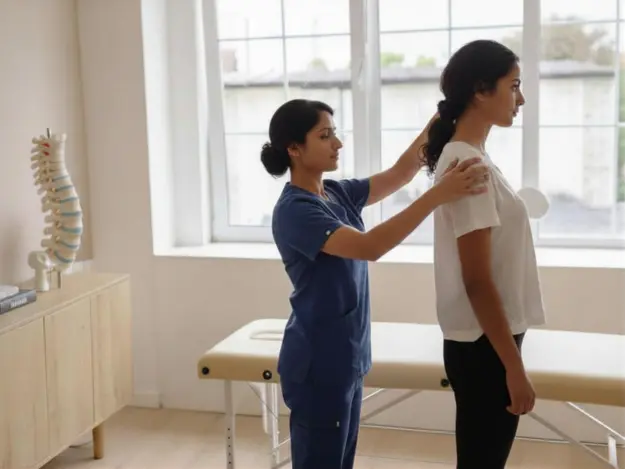
How Physiotherapy Helps Cervical Pain (Spondylosis)
Physiotherapy is one of the most effective first-line treatments for cervical spondylosis and is recommended for most people experiencing cervical pain, neck stiffness, or other symptoms related to cervical arthritis. At ReLiva, we believe successful cervical pain treatment begins with understanding why your neck hurts—not just where it hurts. Two people with similar MRI findings may have very different reasons for their pain, which is why every patient undergoes a comprehensive physiotherapy assessment before treatment begins.
Treating the Root Cause, Not Just the Symptoms
Your physiotherapist evaluates neck movement, posture, muscle strength, joint mobility, nerve involvement, work habits, and daily activities to identify the specific factors contributing to your cervical pain symptoms. Rather than simply treating pain, we focus on the underlying drivers such as joint stiffness, muscle weakness, poor posture, repetitive strain, or altered movement patterns. This allows us to create an individualised cervical problem treatment plan tailored to your condition, occupation, lifestyle, and recovery goals.
Personalised Treatment and Exercise Programme
Treatment may include hands-on manual therapy to improve joint mobility, soft tissue techniques to reduce muscle spasm, and pain-relieving modalities where appropriate. As symptoms improve, supervised cervical pain exercises help restore neck mobility, strengthen the deep neck and shoulder muscles, improve posture, and build long-term support for the cervical spine.
Measuring Progress That Matters
Recovery at ReLiva is measured by improvements that matter in everyday life—not just lower pain scores. Whether your goal is to work comfortably at a computer, drive without stiffness, sleep better, return to exercise, or perform daily activities with confidence, your programme is progressing based on your functional recovery.
Long-Term Self-Management
A key part of cervical problem physiotherapy is helping prevent future flare-ups. You’ll receive practical guidance on posture, workstation ergonomics, activity modification, and a personalised home exercise programme, giving you the knowledge and confidence to manage your neck health long after your treatment is complete.
Clinical practice guidelines consistently recommend education, exercise therapy and manual therapy as core components of conservative management for most people with cervical spondylosis.
Hear It From Our Patients
“My cervical pain and pinched nerve had started affecting everyday life. After 10 days of physiotherapy, I noticed remarkable improvement and felt reassured throughout my treatment.” — Sneha Dutta.
Read Sneha’s complete Google review to learn more about her experience of cervical pain treatment in Chennai.
Every person’s recovery is different. An assessment helps identify whether your symptoms are driven by joint stiffness, muscle imbalance, posture, nerve irritation or a combination of factors.
How Long Does It Take to Recover from Cervical Spondylosis?
Recovery from cervical pain caused by cervical spondylosis varies from person to person. Mild flare-ups may improve with appropriate cervical pain treatment, while long-standing symptoms often require a more structured rehabilitation programme. Factors such as the severity of degeneration, posture, muscle strength, daily activities, and regular practice of cervical pain exercises all influence recovery. Following your physiotherapist’s advice and home exercise programme consistently is one of the most important factors in achieving lasting improvement and reducing future flare-ups.
Exercises for Cervical Spondylosis
Why Exercise Is Important for Cervical Pain?
Exercise is not an optional add-on to physiotherapy for cervical spondylosis; it is central to recovery. Targeted exercise reduces pain, improves mobility, rebuilds supportive musculature, and corrects the postural habits that perpetuate symptoms. Regular exercise also slows the progression of degenerative changes by improving circulation to the spinal structures.
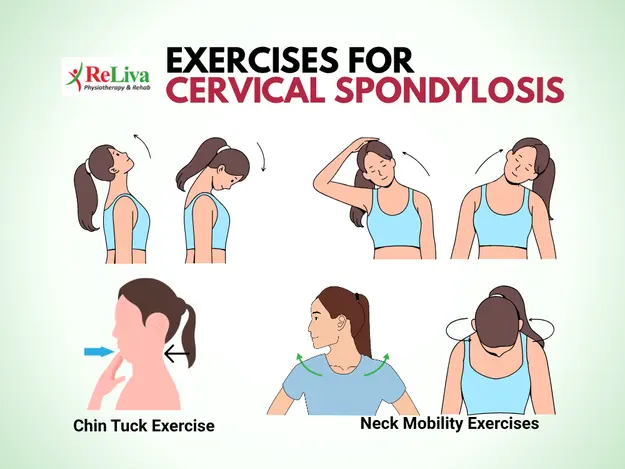
Chin Tuck Exercises
The chin tuck (cervical retraction) is the most fundamental exercise for cervical spondylosis. Gently drawing the chin straight back elongates the posterior cervical spine, activates the deep cervical flexors, and reduces the forward head posture that loads the degenerated segments. 10 repetitions, held 5 seconds each, performed several times daily.
Shoulder Blade Retraction Exercises
Gently squeezing the shoulder blades together and holding for 5 seconds reactivates the mid-trapezius and rhomboids, improving scapular positioning and reducing the anterior shoulder rounding that accompanies forward head posture. 10–15 repetitions.
Neck Mobility Exercises
Gentle, pain-free range of motion exercises including slow rotation, side flexion, and nodding movements maintain cervical joint mobility. These should never be performed forcefully or into pain. Frequency matters more than range in the early stages.
Postural Correction Exercises
Wall angels, thoracic extension over a foam roller, and standing posture drills address the thoracic kyphosis that underlies much of the cervical loading in desk workers. Improving thoracic mobility significantly reduces the compensatory load placed on the cervical spine.
When to Avoid Certain Exercises
Avoid cervical exercises if you have significant neurological symptoms (worsening weakness, bladder or bowel changes) without first obtaining clearance from your physiotherapist. Avoid forceful end-range extension of the neck, particularly if you have known severe stenosis. Avoid any exercise that consistently reproduces arm pain, tingling, or numbness.
How to Prevent Cervical Spondylosis from Getting Worse?
Improve Your Sitting Posture
Sit with the ears aligned over the shoulders and the shoulders over the hips. Avoid letting the head drift forward towards the screen. Even small consistent corrections accumulate meaningfully over a working life.
Your sleeping posture can also influence neck comfort. While a cervical pillow cannot reverse cervical spondylosis, choosing the right pillow may help maintain a more neutral neck position and reduce morning stiffness for some people.
Optimise Your Workstation
Position the screen at eye level so the head does not need to flex or extend. Ensure the chair supports the lumbar spine. Use a headset rather than cradling the phone between ear and shoulder. These adjustments reduce the hours of daily compressive loading on the cervical spine.
Avoid Prolonged Mobile Phone Use
Hold the phone at eye level rather than looking down. Take regular breaks. Limit prolonged scrolling sessions. The cumulative cervical load from daily phone use is substantial and largely preventable with simple habit changes.
Stay Physically Active
Regular movement prevents the stiffness and muscle deconditioning that worsens cervical spondylosis symptoms. Swimming, walking, yoga, and Pilates are all well-suited to maintaining cervical health without excessive loading.
Sleep Position and Pillow Choice
Sleep on your back or side with a pillow that maintains a neutral cervical alignment. Avoid sleeping on your stomach, which requires sustained cervical rotation. A contoured memory foam pillow is generally preferred for those with cervical spondylosis.
Manage Stress
Chronic muscle tension contributes to neck symptoms.
Is Cervical Spondylosis Permanent?
The structural changes of cervical spondylosis, including disc narrowing, osteophytes, and facet joint changes, are generally permanent. The degenerative process cannot be reversed.
However, this is not the same as saying that symptoms are permanent. Many people with significant cervical spondylosis on imaging have minimal or no symptoms with appropriate management. Physiotherapy, exercise, and lifestyle correction consistently reduce pain, improve mobility, and restore quality of life to a level where the condition becomes manageable rather than limiting.
The goal of treatment is not to reverse the imaging findings but to make the changes clinically irrelevant to daily function.

Frequently Asked Questions About Cervical Spondylosis
Q. Can Cervical Spondylosis Be Cured?
Ans. The degenerative changes themselves are permanent. However, symptoms can be effectively controlled in most patients through physiotherapy, exercise, and lifestyle modification. Many people with cervical spondylosis remain fully active and largely pain-free with the right management approach.
Q. Can Physiotherapy Help Cervical Spondylosis?
Ans. Yes, significantly. Physiotherapy is the primary recommended treatment for cervical spondylosis. It reduces pain, restores mobility, corrects posture, and strengthens the supporting musculature, addressing the modifiable factors that drive symptoms rather than just masking pain temporarily.
Q. Is Walking Good for Cervical Spondylosis?
Ans. Yes. Regular walking maintains general spinal health, supports healthy body weight, and encourages natural cervical movement. Walking with good upright posture, rather than looking down at a phone, maximises the benefit. It is a safe and strongly recommended activity for most people with cervical spondylosis.
Q. Can Cervical Spondylosis Get Worse Over Time?
Ans. Yes, the age-related changes in the cervical spine, such as disc degeneration and bone spur formation, may gradually progress over time. However, this does not mean your symptoms will necessarily become worse. Many people have significant cervical spondylosis on X-rays or MRI but experience little or no pain. Regular cervical problem physiotherapy, cervical pain exercises, good posture, an active lifestyle, and ergonomic habits can help manage cervical pain symptoms, improve neck function, and reduce the frequency and severity of flare-ups. The goal of treatment is to help you stay active and prevent cervical spondylosis from affecting your quality of life.
Q. Can Cervical Spondylosis Cause Headaches?
Ans. Yes. Cervicogenic headaches are a well-recognised feature of cervical spondylosis. They originate from the upper cervical joints and muscles and are typically felt at the base of the skull, behind the eyes, or across the forehead. They respond well to physiotherapy directed at the cervical spine.
Q. Can Cervical Spondylosis Cause Dizziness?
Ans. Yes, in some cases. Cervicogenic dizziness, arising from abnormal input from the neck’s proprioceptive system, is a recognised but less common symptom. It should always be assessed to exclude other causes before attributing it to the cervical spine. A physiotherapist experienced in vestibular and cervical conditions can assess and treat this appropriately.
Q. What Is the Best Sleeping Position for Cervical Spondylosis?
Ans. Sleeping on your back or side with a supportive pillow that keeps the cervical spine in a neutral position is recommended. Avoid sleeping on your stomach. A medium-firm contoured pillow generally works well. Your physiotherapist can advise on the best setup for your specific symptom pattern.
Q. When Is Surgery Required?
Ans. Surgery is considered when there is confirmed spinal cord compression (cervical myelopathy) with progressive neurological symptoms, or when significant nerve root compression has not responded to thorough conservative management over several months. The majority of cervical spondylosis patients do not require surgery and achieve good outcomes with physiotherapy alone.
Persistent neck pain doesn’t have to become part of everyday life.
If pain, stiffness or arm symptoms are limiting your work, sleep or daily activities, a physiotherapy assessment can help identify the cause and develop a personalised recovery plan.
….
This article has been reviewed by Dr Sayali Muley (PT).
Dr. Sayali Muley (PT) is a leading neuro physiotherapist in Pune, specializing in advanced neurological rehabilitation. With a BPT, MPT (Neuro), and international certification in Clinical Neurodynamics (NDS Australia), she brings global expertise to local care. Certified in dry needling and electro‑acupuncture, she is skilled in cupping therapy, K‑Taping, mirror therapy, myofascial release, gait training, and muscle energy techniques. Proficient in Brunnstrom, PNF, Bobath, CIMT, and MRP approaches, she helps patients with stroke, spinal cord injuries, and neurological disorders regain mobility, independence, and confidence
…
Scientific References:
- Cervical spondylosis and neck pain; Allan I Binder, BMJ. 2007 Mar 10; 334(7592): 527–531, doi: 10.1136/bmj.39127.608299.80, PMCID: PMC1819511, PMID: 17347239
- Manipulation and mobilisation for mechanical neck disorders; Gross AR, Hoving JL, Haines TA, Goldsmith CH, Kay T, Aker P, Bronfort G; Cervical overview group; Cochrane Database Syst Rev. 2004;(1):CD004249.
- J Back Musculoskelet Rehabil. 2017; 30(6), The efficacy of manual therapy and exercise for treating non-specific neck pain: A systematic review, Benjamin Hidalgo, Toby Hall, Jean Bossert, Axel Dugeny, Barbara Cagnie, and Laurent Pitance: 1149–1169. Published online 2018 Feb 6. Prepublished online 2017 Aug 2. doi: 10.3233/BMR-169615
..