


Medically reviewed by Dr. Dinakaran G. (PT) – Updated September, 2026.
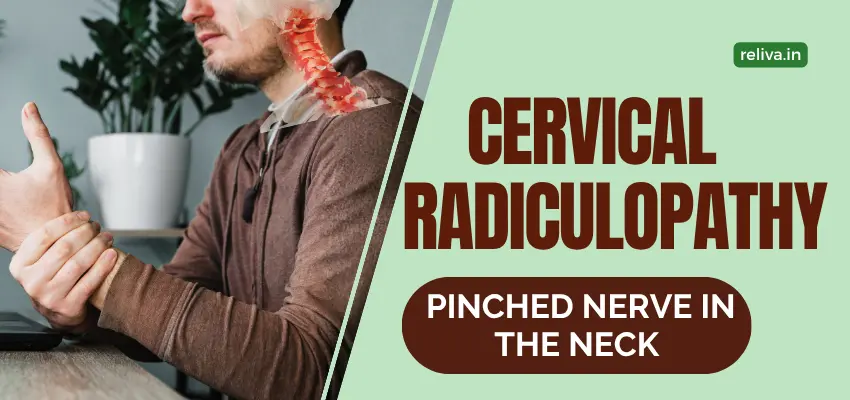
Cervical radiculopathy occurs when a nerve in the neck becomes irritated or compressed at the point where it exits the spinal column. Unlike ordinary neck pain, the symptoms do not stay local. They travel from the neck into the shoulder, arm, forearm, and sometimes the hand, producing neck pain radiating down arm, neck pain going down arm, tingling in arm from neck, and numbness in fingers from neck, and in some cases weakness. Studies suggest that cervical radiculopathy physiotherapy is the recommended first-line treatment for nerve compression in neck structures. It reduces nerve irritation, restores mobility, and supports full recovery in the majority of patients without surgery.
Do You Have a Pinched Nerve in Your Neck?
✓ Neck pain travelling into your shoulder or arm
✓ Tingling in your arm or fingers
✓ Numbness in part of your hand
✓ Pain worse when looking up or turning your head
✓ Weak grip or difficulty lifting objects
If several of these symptoms apply to you, cervical radiculopathy may be the cause. A physiotherapy assessment can confirm the diagnosis.
At ReLiva, treatment is guided by detailed movement assessment, neurological examination and functional goal-setting, ensuring the programme addresses both the irritated nerve and the mechanical factors causing compression.
On This Page
- What Is Cervical Radiculopathy?
- What Causes a Pinched Nerve in the Neck?
- Common Symptoms of Cervical Radiculopathy
- How Do You Know If You Have a Pinched Nerve?
- Can a Pinched Nerve in the Neck Heal on Its Own?
- Diagnosis and MRI for Cervical Radiculopathy
- Treatment for a Pinched Nerve in the Neck
- How Physiotherapy Helps Cervical Radiculopathy
- Exercises for Cervical Radiculopathy
- Recovery and When Surgery Is Needed
- When Should You Seek Medical Attention?
- Frequently Asked Questions
What Is Cervical Radiculopathy?
Understanding Nerve Compression in the Neck
Cervical radiculopathy is a condition in which one or more nerve roots exiting the cervical spine become compressed or irritated. The cervical spine has eight nerve roots on each side, labelled C1 to C8. Each root exits through a small bony opening called the foramen and travels into a specific area of the arm and hand. When a nerve root is compressed, its signals are disrupted, producing pain, altered sensation, and sometimes weakness in the region it serves.
Cervical radiculopathy is not a disease but a mechanical and inflammatory process. The nerve root is being physically compressed, chemically irritated by disc material, or both. The degree of compression and the duration of irritation determine the severity and persistence of symptoms.
Why Is It Often Called a Pinched Nerve?
Cervical radiculopathy is the medical term most commonly used for what patients and the general public refer to as a pinched nerve in the neck. The two terms describe the same condition. When a nerve root in the cervical spine is compressed by a disc, bone spur, or narrowed foramen, it is being pinched, and the symptoms it produces travel along the nerve’s pathway into the arm. Understanding that cervical radiculopathy and a pinched nerve in the neck are the same condition helps patients connect their symptoms with the correct diagnosis and seek appropriate treatment.

What Causes a Pinched Nerve in the Neck?
Cervical Disc Bulges and Herniated Discs
The most common cause of cervical radiculopathy in adults under 50 is a disc bulge or herniation. The intervertebral disc sits between adjacent vertebrae and acts as a shock absorber. When the disc’s outer layer weakens, the inner material can protrude and press directly onto the adjacent nerve root. Disc herniations tend to produce sudden-onset, often severe symptoms and are most common at the C5-C6 and C6-C7 levels.
Cervical Spondylosis and Bone Spurs
In adults over 50, cervical spondylosis is the more common underlying cause. Age-related degeneration of the discs and facet joints leads to the formation of osteophytes (bone spurs) that can encroach on the foraminal space and compress the nerve root. This type of radiculopathy tends to develop more gradually and is associated with a background of neck stiffness and pain. [Read more about cervical spondylosis treatment.]
Narrowing Around the Nerve (Foraminal Stenosis)
Foraminal stenosis refers to narrowing of the bony opening through which the nerve root exits the spine. This is one of the most common structural causes of nerve compression in the neck in older adults. The narrowing can be caused by disc degeneration, osteophytes, thickened ligaments, or a combination of all three. It reduces the space available to the nerve and makes it more vulnerable to irritation, particularly during neck extension and rotation.
Neck Injuries
Acute trauma such as whiplash following a road accident, a sporting collision, or a fall can forcefully compress or stretch the cervical nerve roots. Traumatic radiculopathy may present immediately or develop over the days following the injury.
Repetitive Neck Positions and Poor Posture
Sustained poor posture, particularly prolonged forward head posture during desk work or phone use, increases compressive load on the cervical discs and facet joints. Over time, this accelerates disc degeneration and can contribute to the development of nerve root compression.

Symptoms of Cervical Radiculopathy
Cervical radiculopathy produces a characteristic pattern of symptoms that distinguishes it from ordinary neck pain. The key feature is that symptoms travel beyond the neck.
Neck Pain
Most patients with cervical radiculopathy experience local neck pain alongside their arm symptoms. The neck pain is typically deep and aching, often concentrated in the lower cervical region or at the base of the skull on the affected side.
Pain Radiating Into the Shoulder
The shoulder is a common destination for cervical nerve root referred pain. Many patients initially present with shoulder pain and attribute it to a shoulder problem, only to discover through assessment that the cervical spine is the actual source.
Pain Running Down the Arm
A hallmark of cervical radiculopathy is pain that travels from the neck or shoulder down the arm in a specific pattern. This dermatomal distribution follows the pathway of the compressed nerve root and helps clinicians identify which level is affected.
Tingling and Pins-and-Needles
Tingling in the arm from the neck is one of the most common and diagnostically significant features of cervical radiculopathy. It reflects disrupted electrical conduction in the compressed nerve and follows the same dermatomal pathway as the pain.
Numbness in the Hand or Fingers
Numbness in the fingers from the neck is a reliable indicator of nerve root involvement. Persistent or intermittent numbness in specific fingers helps identify which nerve root level is compressed. The pattern of numbness, combined with the location of pain and weakness, allows the affected nerve root level to be identified clinically before imaging is performed.
Weakness in the Arm or Hand
Significant compression of the nerve root can impair motor function, producing weakness in the muscles supplied by that root. This may manifest as reduced grip strength, difficulty lifting the arm, or weakness in specific finger movements. Progressive weakness is a sign that requires prompt assessment.
Symptoms Based on the Affected Nerve Root
| Nerve Root | Area of Pain / Tingling | Possible Weakness |
|---|---|---|
| C5 | Shoulder and outer upper arm | Shoulder abduction, deltoid |
| C6 | Outer forearm, thumb and index finger | Wrist extension, biceps |
| C7 | Middle finger, back of forearm | Triceps, wrist flexion |
| C8 | Little finger and ring finger, inner forearm | Grip strength, finger flexion |
How Do You Know If You Have a Pinched Nerve in Your Neck?
Symptoms That Suggest Nerve Involvement
The following features strongly suggest cervical nerve root compression rather than simple muscle pain: pain, tingling, or numbness that travels from the neck into the arm or hand; symptoms that follow a consistent pathway regardless of activity; weakness in specific arm or hand movements; symptoms that are reproduced or worsened by specific neck positions (particularly extension and rotation towards the affected side).
Difference Between Muscle Pain and Nerve Pain
Muscle pain is typically localised, dull, and aching. It is reproduced by contracting or stretching the affected muscle and does not travel along a defined pathway. Nerve pain is often sharper, burning, or electric in quality. It follows the nerve’s distribution into the arm and may be accompanied by altered sensation (tingling, numbness) or weakness. A clear radiating pattern from neck to arm almost always indicates nerve rather than muscle involvement.
Signs That Need Professional Assessment
Seek a physiotherapy or medical assessment promptly if you experience: arm pain or tingling that has been present for more than two weeks; progressive weakness in the arm or hand; numbness that is worsening rather than fluctuating; symptoms following a significant trauma; or any of the red flag symptoms listed later in this article.
Cervical Radiculopathy vs Ordinary Neck Pain
| Feature | Ordinary Neck Pain | Cervical Radiculopathy |
|---|---|---|
| Symptom location | Local to the neck | Travels into shoulder, arm or hand |
| Primary symptom | Muscle stiffness and aching | Radiating pain with nerve symptoms |
| Sensation | No altered sensation | Tingling or numbness common |
| Weakness | Absent | May be present in arm or hand |
| Aggravated by | Sustained postures | Neck extension, rotation, certain arm positions |
| Imaging | Often normal | May show disc or nerve root changes |
How Is Cervical Radiculopathy Diagnosed?
Clinical Assessment
Diagnosis begins with a thorough history of symptoms, their distribution, onset, and behaviour. The pattern of pain, tingling, and numbness along with the activities that aggravate or relieve them provides strong diagnostic information before any examination is performed.
Neurological Examination
A neurological examination assesses reflexes, muscle strength, and sensation in the arms and hands. Reduced reflexes, specific patterns of weakness, and dermatomal sensory changes help confirm the diagnosis and identify the affected nerve root level. Specific provocation tests, including Spurling’s test and the upper limb tension test, are used to reproduce and assess nerve root symptoms.
MRI and Other Imaging
MRI of the cervical spine provides detailed visualisation of the discs, nerve roots, and spinal cord. CT myelography may be used when MRI is not possible. X-rays can show degenerative changes but do not visualise the nerve roots directly.
Most people can begin physiotherapy based on a thorough clinical assessment. MRI is usually reserved for persistent symptoms, significant weakness, or when surgery is being considered.
Why Symptoms Matter More Than Scans Alone?
A critical principle in managing cervical radiculopathy is that imaging findings must always be interpreted in the context of clinical symptoms. Degenerative changes, disc bulges, and even mild nerve root compression are common findings on MRI in adults without any symptoms. Treating a scan rather than a patient leads to unnecessary intervention. At ReLiva Physiotherapy & Rehab, assessment is always symptom-led, with imaging used to confirm and clarify rather than to direct treatment independently.
Can a Pinched Nerve Heal on Its Own?
Yes, mild cases of a pinched nerve in the neck can sometimes improve with time, especially if the irritation is caused by temporary inflammation or a minor disc bulge. Reducing activities that aggravate symptoms, maintaining good posture, and avoiding prolonged neck positions can help the nerve settle. However, physiotherapy often speeds recovery by reducing nerve compression, restoring movement, and correcting the underlying mechanical factors that caused the problem. If arm pain, tingling, numbness, or weakness persists for more than a few weeks, or symptoms keep returning, a physiotherapy assessment is recommended to identify the cause and prevent long-term nerve irritation.
Not Sure What’s Causing Your Neck Pain?
Neck pain can have several contributing factors, and the right treatment depends on what’s driving your symptoms. A physiotherapy assessment at ReLiva can help identify movement, posture, muscle, joint or nerve-related factors and guide you towards the appropriate treatment and exercises.
What Is the Best Treatment for a Pinched Nerve in the Neck?
| Treatment | Role | When Used |
|---|---|---|
| Activity modification | Reduce provocative loading | All stages |
| Medications | Short-term pain and inflammation control | Acute phase |
| Physiotherapy | Primary treatment for most cases | First-line |
| Injections | When conservative treatment is insufficient | Moderate to severe |
| Surgery | Severe nerve compression with deficit | Last resort |
Activity Modification
Identifying and avoiding movements and positions that consistently provoke arm symptoms, while maintaining general activity, is an important early step. This reduces nerve irritation without creating the deconditioning that comes with complete rest.
Medications
Anti-inflammatory medications, analgesics, and in some cases short-course oral corticosteroids or neuropathic pain agents (such as pregabalin or amitriptyline) may be used to manage acute pain and nerve irritation. Medications support physiotherapy but do not address the underlying mechanical cause.
Physiotherapy
Physiotherapy for a pinched nerve in the neck is the most effective and evidence-supported approach for cervical radiculopathy. It addresses the nerve compression, restores movement, corrects the contributing postural and structural factors, and rebuilds the muscular support that protects the cervical nerve roots.
Injections
Cervical nerve root injections or epidural steroid injections may be considered when pain levels are high enough to prevent engagement with physiotherapy, or when symptoms have not adequately responded to conservative treatment. They work best as a bridge to rehabilitation.
Surgery
Surgery for cervical radiculopathy, typically anterior cervical discectomy and fusion or cervical disc replacement, is reserved for patients with progressive neurological deficit, severe and unremitting arm symptoms despite thorough conservative management, or confirmed spinal cord compression. The majority of patients do not require surgical intervention.
How Physiotherapy Helps Cervical Radiculopathy
Physiotherapy is the most comprehensive and effective treatment for cervical radiculopathy. At ReLiva Physiotherapy & Rehab, treatment is not limited to pain management. It systematically addresses every driver of the condition to produce lasting recovery.
Here’s a patient review for cervical radiculopathy in Mumbai that shows how ReLiva’s personalised physiotherapy made a lasting difference.
Allyshan F., shared that after being diagnosed with cervical radiculopathy. “The pain had become so severe that even simple daily activities felt impossible. What stood out most was the physiotherapist’s thorough assessment, clear explanation of the condition, and commitment to treating the root cause. The personalised care and continuous encouragement throughout recovery helped restore both function and confidence.”
Pain Reduction Strategies
Manual therapy to the cervical joints, soft tissue release of the neck and shoulder muscles, and electrotherapy modalities including IFT and TENS are used to reduce acute pain and the protective muscle spasm surrounding the irritated nerve root. Cervical traction, applied manually or mechanically, creates temporary decompression of the foramen and can provide significant relief in appropriate cases.
Improving Nerve Mobility
Neural mobilisation is a central component of cervical radiculopathy treatment. The sciatic nerve analogy is useful: just as the sciatic nerve must move freely through the hip and leg, the cervical nerve roots must glide freely through the foramen and along their pathway into the arm. When a nerve is compressed or adhered, these gliding movements are restricted. Neural mobilisation techniques gently restore normal nerve mobility, reducing neural tension and the radiating symptoms it produces.
Restoring Neck Movement
Restricted cervical mobility increases the mechanical load on the affected disc and foramen. Targeted mobilisation and controlled movement exercises progressively restore the full range of neck motion, reducing the sustained compression on the nerve root.
Postural Correction
Forward head posture increases the compressive load on the cervical discs and foramina, reducing the available space for the nerve roots. Correcting this posture, both through targeted exercises and ergonomic changes to the workstation and daily environment, directly reduces the mechanical load on the compromised nerve root. ReLiva Physiotherapy & Rehab physiotherapists provide specific, practical postural guidance for forward head posture tailored to each patient’s work and home setup.
Strengthening Supporting Muscles
Weak deep cervical flexors, poor scapular stability, and inhibited rotator cuff muscles all increase the load on the passive structures of the cervical spine. A progressive strengthening programme rebuilds the muscular support system that protects the nerve roots during daily activity and exercise.
Preventing Recurrence
A complete physiotherapy programme equips the patient with the postural habits, exercise routine, and ergonomic awareness to prevent cervical radiculopathy from returning. Without addressing these factors, the mechanical environment that caused the nerve compression persists.
A patient review for cervical radiculopathy in Bengaluru from Abhay M., highlights how a structured 10‑day physiotherapy programme at ReLiva supported effective symptom relief and recovery. He appreciated the professional care and found the treatment beneficial in supporting his recovery.
Exercises for a Pinched Nerve in the Neck
Cervical radiculopathy exercises are a core component of recovery. The right exercises reduce nerve compression, restore mobility, and build the muscular support that prevents recurrence. They also help manage the neck pain going down the arm that is the most disabling feature of this condition for many patients. Always perform within a pain-free range and stop immediately if any exercise increases arm pain, tingling, or numbness. Begin under the guidance of a physiotherapist.
Chin Tuck Exercises
Gently draw the chin straight back without tilting the head down. Hold for 5 seconds. This activates the deep cervical flexors and reduces forward head posture, decreasing compressive load on the cervical foramina. Perform 10 repetitions, 2 to 3 times daily.
Postural Correction Exercises
Shoulder blade retraction, thoracic extension over a foam roller, and wall posture drills improve the overall postural alignment that reduces cervical nerve root loading. These exercises address the thoracic and shoulder components of forward head posture.
Nerve Gliding Exercises
Nerve gliding (neural mobilisation) exercises gently move the cervical nerve root through its full range of motion, reducing adhesions and neural tension. A common technique involves slowly tilting the head away from the affected side while gently extending the wrist and fingers on the same side. These must be performed gently and are best introduced under physiotherapy supervision.
Scapular Strengthening Exercises
Clamshell, shoulder external rotation with a resistance band, and prone Y and T exercises strengthen the scapular stabilisers, reducing the mechanical load transferred to the cervical spine during arm movement.
Mobility Exercises
Gentle, pain-free cervical rotation, side flexion, and nodding movements maintain joint mobility and prevent progressive stiffness. These are always performed slowly and within a symptom-free range, never into positions that reproduce arm symptoms.
Can a Pinched Nerve in the Neck Heal Without Surgery?
When Conservative Treatment Is Effective?
Yes, the majority of cervical radiculopathy cases resolve without surgery. Research consistently shows that with appropriate conservative management, including physiotherapy, most patients experience significant or complete resolution of arm symptoms within 4 to 12 weeks. Even cases with moderate neurological findings frequently recover fully through non-surgical means.
Role of Physiotherapy
Physiotherapy for a pinched nerve in the neck addresses the mechanical cause, reduces nerve irritation, and rebuilds the supporting structures that prevent recurrence. It is the most evidence-supported conservative treatment and produces results that are sustained long after the treatment programme ends.
Expected Recovery Timeline
Most patients with cervical radiculopathy treated with physiotherapy experience meaningful improvement within 4 to 6 weeks. Full resolution typically occurs within 8 to 16 weeks, depending on severity and how long symptoms were present before treatment began.
When Surgery May Be Recommended for a Pinched Nerve?
Surgery is recommended when neurological deficits are progressive and not responding to conservative care, when spinal cord compression is confirmed, or when severe, unremitting arm pain has failed to respond to a full course of physiotherapy and injections. These situations represent a minority of cervical radiculopathy presentations.
How Long Does Recovery Take?
Recovery from cervical radiculopathy varies from person to person. Mild cases often improve within a few weeks, while more severe or long-standing nerve compression may take several months. The speed of recovery depends on the severity of nerve irritation, how long symptoms were present before treatment began, whether there is muscle weakness or significant numbness, and how consistently you follow your physiotherapy programme and home exercises. Starting physiotherapy early, staying active within comfortable limits, and addressing posture and ergonomic factors all help improve recovery and reduce the risk of symptoms returning.
When Should You Seek Medical Attention?
Progressive Weakness
Weakness in the arm or hand that is worsening over days or weeks rather than fluctuating requires prompt medical assessment. Progressive neurological deficit may indicate a level of compression that needs urgent review.
Severe Numbness
Numbness that is dense, constant, and not improving suggests significant nerve compression. Prolonged severe numbness can result in persistent sensory changes if not addressed in time.
Loss of Hand Function
Difficulty gripping, dropping objects, or inability to perform fine motor tasks in the hand is a functionally significant finding that warrants immediate assessment.
Difficulty Walking or Balance Problems
Leg weakness, difficulty walking, or balance problems alongside cervical arm symptoms may indicate cervical myelopathy, where the spinal cord rather than just the nerve root is compressed. This requires urgent medical review.
Persistent Symptoms
Any cervical radiculopathy symptoms that have not shown improvement after 6 to 8 weeks of appropriate physiotherapy should be reassessed, with consideration of imaging or specialist referral.
Cervical Radiculopathy vs Cervical Spondylosis
| Feature | Cervical Radiculopathy | Cervical Spondylosis |
|---|---|---|
| Primary nature | Nerve compression condition | Degenerative joint condition |
| Main symptoms | Arm pain, tingling, numbness | Neck pain and stiffness |
| Neurological signs | Common (tingling, weakness) | Less common unless severe |
| Symptom pattern | Specific nerve root distribution | Diffuse or bilateral neck symptoms |
| Age of onset | Any age | More common over 40 |
| Imaging | Nerve root compression visible | Disc and joint degeneration |
The two conditions frequently coexist. Cervical spondylosis creates the degenerative environment in which nerve root compression is more likely to occur. A patient may have both conditions simultaneously, requiring a physiotherapy programme that addresses both the degenerative changes and the nerve root irritation.
Disc Bulge vs Cervical Radiculopathy
| Disc Bulge | Cervical Radiculopathy |
| MRI finding | Clinical condition |
| May have no symptoms | Causes arm symptoms |
| Doesn’t always need treatment | Needs clinical assessment |

Frequently Asked Questions About Cervical Radiculopathy
Q. What Is Cervical Radiculopathy?
Ans. Cervical radiculopathy is the medical term for a pinched nerve in the neck. It occurs when a nerve root exiting the cervical spine is compressed or irritated by a disc herniation, bone spur, or narrowed foramen. The result is pain, tingling, numbness, or weakness that travels from the neck into the shoulder, arm, or hand, following the pathway of the affected nerve root.
Q. Is a Pinched Nerve in the Neck Serious?
Ans. Most cases of cervical radiculopathy are not immediately dangerous and resolve well with physiotherapy. However, progressive weakness, severe numbness, loss of hand function, or any difficulty walking should be assessed urgently. At ReLiva Physiotherapy & Rehab, all presentations of cervical radiculopathy are thoroughly assessed to identify any features requiring urgent referral alongside physiotherapy management.
Q. Can Physiotherapy Help a Pinched Nerve?
Ans. Yes, physiotherapy is the most effective treatment for cervical radiculopathy (pinched nerve in the neck). It reduces nerve compression through manual therapy and traction, restores normal nerve mobility through neural mobilisation, corrects the posture and weakness that caused the problem, and produces lasting recovery in the majority of patients.
Q. Can a Pinched Nerve Heal Naturally?
Ans. Mild cases can improve on their own with activity modification and postural correction. However, most cases benefit significantly from physiotherapy, which accelerates recovery, reduces the risk of permanent nerve changes, and addresses the underlying mechanical cause. At ReLiva Physiotherapy & Rehab, even patients who present after months of symptoms often achieve full or near-full resolution through structured physiotherapy.
Q. How Long Does Recovery from Cervical Radiculopathy Take?
Ans. Mild cases typically improve within 4 to 6 weeks. Moderate cases may take 8 to 12 weeks. Severe or long-standing cases can require 12 to 20 weeks of treatment. Starting physiotherapy early is the single most reliable way to shorten recovery time.
Q. What Is the Best Sleeping Position for cervical radiculopathy?
Ans. Sleeping on the back with a supportive cervical pillow that maintains a neutral neck position is generally recommended. Side sleeping is also acceptable if the pillow height keeps the neck aligned. Avoid sleeping on the stomach, which requires sustained cervical rotation and increases nerve root compression. ReLiva Physiotherapy & Rehab physiotherapists provide specific sleeping position advice based on each patient’s nerve root level and symptom pattern.
Q. Which Exercises Help Cervical Radiculopathy?
Ans. The most effective exercises for cervical radiculopathy include chin tucks to activate the deep cervical flexors and reduce nerve compression, nerve gliding exercises to restore neural mobility, scapular strengthening to reduce cervical load, and gentle cervical mobility exercises. These should always be introduced under physiotherapy guidance to ensure they are appropriate for the specific nerve root involved and symptom severity.
Q. When Is Surgery Necessary for Cervical radiculopathy?
Ans. Surgery for cervical radiculopathy is considered when neurological deficits are progressive and not responding to conservative treatment, when spinal cord compression is confirmed, or when severe arm pain and neurological deficit have not responded to a full course of physiotherapy and injections. The large majority of patients, including those with significant symptoms, achieve full recovery without surgical intervention. At ReLiva Physiotherapy & Rehab, surgery is always considered only after conservative options have been thoroughly explored.
Q. Which Fingers Become Numb With a Pinched Nerve?
Ans. The pattern depends on the affected nerve root. Thumb and index finger symptoms commonly suggest C6 involvement, the middle finger often indicates C7, while tingling in the ring and little fingers may suggest C8 nerve root irritation. A physiotherapy assessment helps identify the affected level.
Q. Can I Continue Working With Cervical Radiculopathy?
Ans. Most people can continue working with temporary activity modification and ergonomic adjustments. Avoid positions that increase arm pain or numbness, take regular movement breaks, and follow your physiotherapist’s advice. If your work involves heavy lifting or repetitive overhead activities, temporary modifications may be needed during recovery.
Ready to Understand What’s Causing Your Neck Pain?
Whether your neck pain is related to posture, muscle strain, a spinal condition or nerve involvement, identifying the contributing factors is the first step towards effective recovery.
Book a physiotherapy assessment at ReLiva Physiotherapy & Rehab for a personalised evaluation, treatment plan and guidance to help you move comfortably and reduce the risk of recurring neck pain.
….
This article has been reviewed by Dr. Dinakaran G. (PT).
Dr. Dinakaran G (PT) is a skilled physiotherapist in Hosur with clinical experience and certifications in Dry needling, pediatric care, posture analysis techniques, manual technique and mobilization. He offers advanced treatment for back pain, neck pain, sports injuries, neuro rehab, and pediatric physiotherapy. A BPT graduate, he is well versed with modern therapies like K‑Taping, Manual Therapy, NeuroDynamics, Gait Training, and Pelvic Floor Therapy, delivering effective, evidence‑based care.
…

