

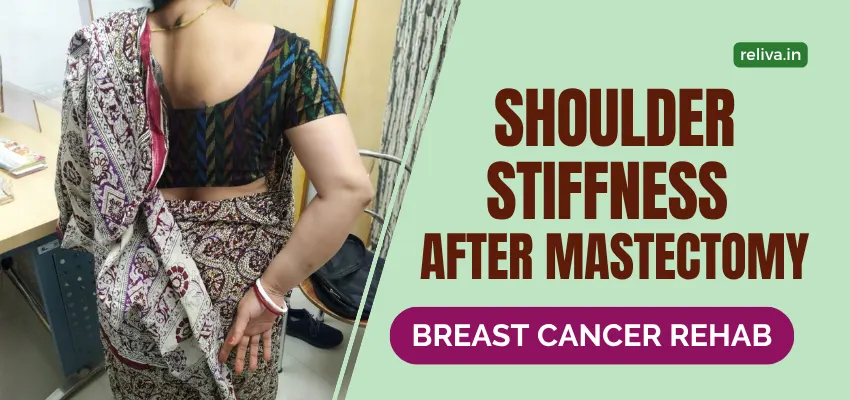

Breast cancer surgery is a critical step in treatment, but recovery continues long after the procedure. Many women notice that moving their arm or shoulder feels difficult during the weeks following surgery. Shoulder stiffness after mastectomy is a common concern and can affect everyday activities such as reaching overhead, dressing, combing hair, or lifting light objects. Shoulder physiotherapy after breast cancer surgery helps restore normal arm movement and prevents long-term stiffness.
The shoulder joint works closely with the chest muscles, upper back muscles, and surrounding connective tissues. During breast cancer surgery, these structures may be affected by surgical trauma, scar formation, and protective muscle guarding. As a result, the shoulder may gradually become stiff if movement is not restored in a guided and safe way.
Early rehabilitation is important for preventing long-term movement restrictions. Shoulder physiotherapy after breast cancer surgery focuses on improving mobility, restoring muscle balance, and reducing tissue tightness. With structured physiotherapy and consistent exercises, most women can regain comfortable shoulder movement and return to their daily activities confidently.
Recovery after breast cancer surgery usually follows a structured rehabilitation timeline.
Follow this quick guide to what’s included in this article: [Jump Links]
- Why Shoulder Stiffness Occurs After Mastectomy
- Symptoms of Shoulder Stiffness
- Physiotherapy Assessment
- Exercises for Shoulder Stiffness After Mastectomy
- Scar Tissue and Soft Tissue Tightness
- Recovery of Shoulder Movement
- When to See a Physiotherapist
- FAQs
Why Shoulder Stiffness Occurs After Mastectomy
Shoulder stiffness is a common complication after mastectomy, affecting up to 91% of patients due to pain, reduced range of motion, and axillary lymph node dissection, reports a study [1].
Shoulder stiffness after mastectomy usually develops due to a combination of physical and behavioural factors during the healing phase. Understanding these causes helps explain why guided rehabilitation is necessary for recovery.
Protective Posture After Surgery
After breast surgery, many women instinctively protect the operated side. They may keep the arm close to the body, avoid lifting it, or slightly round their shoulders forward to minimise discomfort.
While this protective posture may feel safe initially, maintaining it for long periods can lead to stiffness in the shoulder joint and surrounding muscles. The chest muscles may become tight while the upper back muscles weaken, resulting in restricted shoulder movement.
Scar and Soft Tissue Tightness
Surgical incisions heal by forming scar tissue. Scar formation is a normal part of healing, but the new tissue is often less flexible than the original skin and muscle layers.
When scars develop around the chest or underarm area, they can create tightness across the shoulder and arm. This tightness may limit stretching and overhead movements, making the shoulder feel restricted.
Pain-Related Movement Avoidance
Pain or discomfort around the surgical area may cause patients to avoid moving their arm. Reduced movement in the early recovery phase can gradually lead to joint stiffness.
Over time, muscles surrounding the shoulder may become weaker and less active, further reducing mobility. Physiotherapy helps break this cycle by introducing gentle movement at the right stage of healing.

Symptoms of Post-Mastectomy Shoulder Stiffness
Shoulder stiffness can appear gradually during the recovery period. Recognising early symptoms helps ensure timely rehabilitation.
Difficulty Lifting Arm
One of the most common symptoms is difficulty lifting the arm above shoulder level. Patients may struggle to reach overhead or place objects on higher shelves.
Even simple tasks such as washing hair or wearing certain clothes may feel challenging.
Tightness or Pulling Sensation
Many women report a tight or pulling sensation across the chest or underarm area when moving their arm. This feeling is often linked to scar tissue formation and muscle tightness.
The sensation may become more noticeable when stretching the arm sideways or reaching backward.
Reduced Range of Motion
Shoulder stiffness can also limit the natural range of motion of the joint. Movements such as rotating the shoulder, reaching behind the back, or extending the arm outward may feel restricted.
Medical studies [2] also suggest that both shoulder ROM and strength are reduced during the early recovery phase after breast cancer surgery regardless of types of surgery. Their findings suggest that rehabilitation exercises should be implemented in both upper limbs. Without rehabilitation, this reduced mobility may persist and interfere with daily activities.
Some women may also experience arm swelling after mastectomy or breast conservation surgery, also known as Lymphedema.
Struggling to Lift Your Arm or Reach Overhead?
You don’t have to live with restricted shoulder movement after surgery. If simple tasks like dressing or grooming feel difficult, early physiotherapy can restore range of motion and prevent long-term stiffness.
Physiotherapy Assessment for Shoulder Mobility
A physiotherapy assessment helps identify the specific factors contributing to shoulder stiffness after mastectomy.
During the assessment, the physiotherapist evaluates shoulder range of motion, muscle strength, posture, and scar tissue mobility. They also assess how the patient performs functional movements such as reaching, lifting, and rotating the arm.
The therapist may ask questions about pain levels, daily activities, and recovery progress since surgery. This information helps determine whether stiffness is related to muscle tightness, joint restriction, scar tissue, or protective movement patterns.
Based on these findings, an individualised rehabilitation plan is created. The treatment program is usually structured in stages so that mobility can improve safely without stressing healing tissues.
Exercises for Shoulder Stiffness After Mastectomy
Exercise plays a central role in restoring shoulder mobility after breast cancer surgery. The goal is to gradually reintroduce movement while improving muscle strength and flexibility.
Early Mobility Exercises
Early mobility exercises focus on gentle shoulder movements that encourage circulation and prevent stiffness. These may include controlled arm lifts, shoulder rolls, and assisted reaching movements.
The emphasis during this stage is on slow and comfortable movement rather than pushing the arm beyond its limits.
Stretching Techniques
Once the initial healing phase has progressed, stretching exercises may be introduced to improve flexibility in the chest, shoulder, and upper back muscles.
Stretching helps reduce tightness caused by scar tissue and prolonged protective posture. Gradual stretching improves the ability to lift the arm higher and perform overhead activities.
Strengthening Progression
As mobility improves, strengthening exercises are added to rebuild muscle support around the shoulder joint. Strengthening focuses on the upper back muscles, shoulder stabilisers, and chest muscles.
Resistance bands or light weights may be used to progressively increase muscle activation and improve joint stability.
Functional Reach Training
Functional exercises help patients regain confidence in using their arm during everyday tasks. These exercises simulate movements such as reaching shelves, lifting light objects, or placing items at different heights.
Functional training ensures that improvements in mobility translate into better performance in daily activities.
Lymphedema exercises may also be needed in some cases.

Scar Tissue Tightness and Shoulder Movement
Scar tissue can sometimes limit shoulder movement by creating tightness in the chest and underarm region. Physiotherapy techniques can help improve the flexibility of these tissues.
Scar mobilization involves gentle manual techniques that help soften the scar and improve its mobility over the underlying tissues. These techniques may include light massage and guided stretching around the healed incision area.
Soft tissue therapy may also target surrounding muscles such as the pectoral muscles, upper back muscles, and shoulder stabilisers. Improving flexibility in these tissues helps restore smoother and more comfortable shoulder movement.
Scar management techniques are usually introduced once the surgical incision has fully healed and with the surgeon’s clearance.
Recovery of Shoulder Movement After Mastectomy
Shoulder recovery varies depending on the type of surgery, lymph node removal, and individual healing. With guided physiotherapy, most women gradually regain comfortable arm movement over the first few months after surgery. Early mobility, followed by stretching and strengthening exercises, helps restore shoulder function safely.
Returning to daily activities after breast cancer requires gradual rehabilitation.
Move Freely Without Pain or Restriction
Targeted physiotherapy helps reduce stiffness, improve flexibility, and rebuild shoulder strength after breast cancer surgery.
Take the next step toward full shoulder recovery.
When to Seek Physiotherapy After Mastectomy
Physiotherapy can play an important role in recovery if shoulder stiffness appears after breast cancer surgery. Early guidance helps prevent movement restrictions from becoming long-term problems.
Women should consider consulting a physiotherapist if they notice persistent shoulder stiffness, difficulty lifting the arm, or tightness across the chest and underarm area.
Specialised rehabilitation programs offered at centres such as Reliva Physiotherapy & Rehab focus on helping breast cancer survivors regain shoulder mobility safely. Experienced physiotherapists assess the patient’s condition, guide progressive exercises, and address scar tissue tightness that may be limiting movement. Such Onco specialised physiotherapy programs can help breast cancer survivors gradually restore arm function, reduce pain, and return to daily activities safely.
Schedule a recovery assessment and get clear guidance on how to relieve pain and regain shoulder function for your daily activities.

FAQ
Q1. Is shoulder stiffness normal after mastectomy?
Yes, mild shoulder stiffness is common after breast cancer surgery because of surgical trauma, scar formation, and temporary reduction in arm movement. However, if stiffness persists or interferes with daily activities, physiotherapy can help restore mobility and prevent long-term joint restrictions.
Q2. When should shoulder exercises begin after breast cancer surgery?
Gentle movements usually begin within the first week after surgery with medical clearance. These exercises gradually progress as healing improves. Starting movement early under professional guidance helps prevent stiffness and muscle weakness.
Q3. Can physiotherapy improve shoulder mobility after mastectomy?
Yes, physiotherapy is one of the most effective ways to restore shoulder mobility. Treatment typically includes stretching exercises, strengthening programs, posture correction, and scar tissue management techniques that improve flexibility and reduce tightness.
Q4. How long does it take to recover shoulder movement after surgery?
Many patients notice improvement within six to eight weeks when rehabilitation exercises are performed regularly. Full functional recovery may take several months depending on the type of surgery and individual healing response.
Q5. Where can breast cancer survivors get specialised shoulder physiotherapy?
Breast cancer survivors can benefit from rehabilitation programs at centres such as Reliva Physiotherapy & Rehab, where physiotherapists design structured recovery plans to improve shoulder movement, reduce pain, and help patients return to daily activities safely.
Regain Comfortable Shoulder Movement After Surgery
Shoulder stiffness after mastectomy can limit everyday activities if not addressed early. With guided physiotherapy, you can restore mobility, reduce tightness, and move your arm with confidence again.
Start a personalised shoulder rehabilitation program today.
____________________
This post has been reviewed by physiotherapist Dr Priyal Parekh. Dr. Priyal Parekh (PT) is a super‑specialist in Onco‑Physiotherapy and a board‑certified lymphedema therapist in Vadodara, dedicated to cancer rehabilitation and survivorship care. With BPTh and MPTh (MSK) qualifications, she provides advanced physiotherapy for patients recovering from cancer treatments, focusing on lymphedema management, pelvic floor therapy, and musculoskeletal recovery. Skilled in cupping, dry needling, K‑Taping, Maitland, Mulligan’s, McKenzie, manual therapy, neurodynamics, gait training, and myofascial release, she offers comprehensive, evidence‑based rehabilitation. Her expertise makes her a trusted choice for onco-physiotherapy in Vadodara.
Scholarly References:
[1] Foster L, Schuster KA, Escobar-Domingo MJ, Lee D, Taritsa IC, Alvarez AH, Foppiani J, Knerr RM, Sharif M, Zhang YB, Lin SJ. Incidence of Shoulder Impairment in Breast Cancer Treatment and Reconstruction: A Single-Institution Study. Plast Reconstr Surg. 2025 Dec 24. doi: 10.1097/PRS.0000000000012738. PMID: 41453231.
[2] Min J, Kim JY, Yeon S, Ryu J, Min JJ, Park S, Kim SI, Jeon JY. Change in Shoulder Function in the Early Recovery Phase after Breast Cancer Surgery: A Prospective Observational Study. J Clin Med. 2021 Jul 31;10(15):3416. doi: 10.3390/jcm10153416. PMID: 34362199; PMCID: PMC8347494.

