


Medically reviewed by Dr. Aryasree KT (PT) – Updated May, 2026.
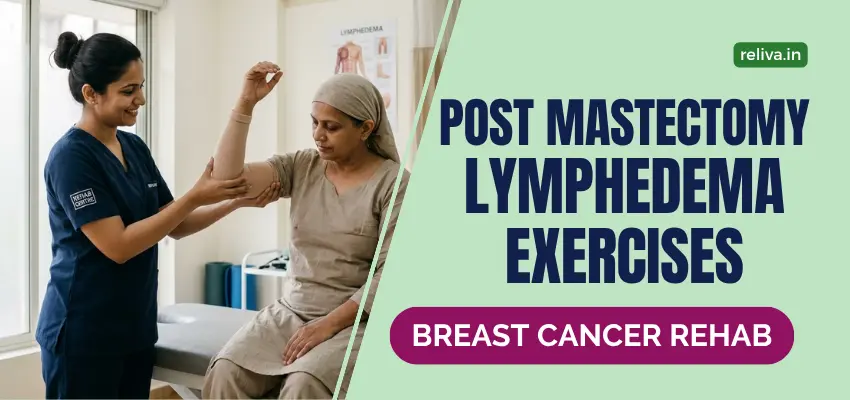
Post mastectomy lymphedema exercises and specialised lymphedema physiotherapy after breast cancer help improve fluid drainage and prevent long-term swelling. Afterall recovery after breast cancer surgery involves more than healing the surgical wound. Many women experience swelling in the arm or hand weeks or months after treatment. This condition, known as post-mastectomy lymphedema, occurs when the lymphatic system is unable to drain fluid efficiently. Fortunately, rehabilitation that includes post mastectomy lymphedema exercises and physiotherapy can significantly reduce swelling and improve arm function, as shown by medical studies [1] too.
The lymphatic system plays an important role in maintaining fluid balance and supporting immune function. When lymph nodes are removed during breast cancer surgery or affected by radiation therapy, normal lymph flow may be disrupted. As a result, fluid can accumulate in the tissues of the arm, causing swelling, heaviness, and discomfort.
Cancer Rehabilitation Physiotherapy helps restore lymphatic circulation through specialised techniques, controlled exercises, and compression strategies. Lymphedema physiotherapy after breast cancer focuses on improving fluid movement, maintaining joint mobility, and preventing the condition from worsening over time. With the right guidance, many women can manage symptoms effectively and continue their daily activities with confidence.
Learn when physiotherapy should begin if swelling appears after surgery.
Here is your quick guide on what follows in this article: {JUMP LINKS}
- What Is Post-Mastectomy Lymphedema?
- How Physiotherapy Helps Reduce Lymphedema?
- Precautions for Managing Lymphedema
- Post-Mastectomy Lymphedema Exercises
- Compression Therapy
- Manual Lymphatic Drainage
- Safety During Exercise
- Expected Improvement Timeline
- FAQs
What Is Post-Mastectomy Lymphedema
Post-mastectomy lymphedema refers to swelling that develops in the arm, hand, or chest region after breast cancer treatment. It usually occurs when lymph nodes are removed or damaged during surgery or radiation therapy.
Lymph nodes act as filters and drainage points for lymph fluid. When some of these nodes are removed, the lymphatic system must find alternate pathways to drain fluid. In many cases, the body adapts over time. However, when drainage becomes insufficient, lymph fluid accumulates in the tissues and leads to swelling.
The swelling may appear gradually and may initially feel like heaviness or tightness in the arm. Some women notice that their rings, watches, or sleeves feel tighter than usual. Over time, the affected arm may appear visibly larger.
Although lymphedema cannot always be completely cured, it can be managed effectively through physiotherapy, exercise, and lifestyle modifications. Physiotherapy and Onco rehabilitation plays a key role in controlling swelling and maintaining normal arm movement.

How Physiotherapy Reduces Lymphedema?
Physiotherapy is one of the most effective approaches for managing lymphedema after breast cancer surgery. Treatment focuses on improving the movement of lymph fluid through safe and controlled techniques.
Fluid Movement Principles
The lymphatic system relies on gentle pressure changes within the body to move fluid. Unlike blood circulation, which is driven by the heart, lymph fluid moves slowly through vessels and depends on body movement, breathing, and muscle activity.
When the body moves, surrounding tissues and muscles apply mild pressure on the lymph vessels. This pressure helps push lymph fluid forward through a network of channels toward functioning lymph nodes, where it is eventually filtered and returned to the bloodstream.
Deep breathing also plays an important role in this process. As the diaphragm moves during breathing, it creates pressure changes in the chest and abdominal cavity. These changes help guide lymph fluid toward central drainage pathways.
After breast cancer surgery, when lymph nodes are removed or affected, this natural flow may slow down. Physiotherapy techniques aim to stimulate these natural mechanisms so that lymph fluid can move toward healthy drainage pathways. Gentle exercises, breathing techniques, and manual therapy all work together to encourage smoother lymph circulation and reduce fluid accumulation in the arm.
Role of the Muscle Pump
Muscles play an important role in supporting lymphatic circulation. When muscles contract and relax during movement, they create a pumping effect that helps push lymph fluid through the vessels.
This is why post mastectomy, lymphedema exercises are an important part of treatment. Gentle arm movements activate surrounding muscles, which helps improve fluid drainage and reduce swelling.
Precautions for Managing Lymphedema After Breast Cancer
- Maintain proper skin care
Keep the affected arm clean and well moisturised. Dry or damaged skin increases the risk of infection, which can worsen lymphedema. - Watch for early signs of infection
Redness, warmth, increased swelling, pain, or fever should be addressed immediately. Prompt treatment helps prevent complications. - Protect the affected arm
Avoid cuts, burns, or injuries, as even minor skin damage can trigger or worsen swelling. - Avoid tight clothing or accessories
Tight sleeves, bangles, watches, or rings can restrict lymphatic flow and increase swelling. - Follow compression and exercise guidance
Use compression garments and perform exercises exactly as advised to support lymphatic drainage and prevent fluid buildup.
If you are unsure when to begin treatment, read our guide on when to start physiotherapy after mastectomy.
Exercises for Post-Mastectomy Lymphedema
Exercise is a safe and effective way to manage lymphedema when performed correctly. The goal is to stimulate lymph flow without overloading the affected tissues. Exercises are usually introduced gradually and progressed according to the patient’s comfort level. Recent study in a medical journal [2] supports Breast cancer survivors to exercise safely after their mastectomy.
Breathing Exercises
Deep breathing is often the first exercise recommended for lymphedema management. Slow diaphragmatic breathing creates pressure changes inside the chest cavity, which helps move lymph fluid toward the central lymphatic channels.
Patients are encouraged to inhale deeply through the nose, allowing the abdomen to expand, and then exhale slowly. Performing these breathing exercises several times a day can support lymphatic circulation.

Arm Mobility Exercises
Gentle arm mobility exercises help maintain joint flexibility and stimulate fluid movement. These may include slow shoulder lifts, arm circles, and controlled reaching movements.
The focus is on smooth and comfortable movement rather than forceful stretching. Regular mobility exercises prevent stiffness while encouraging lymph flow through the arm.
Progressive Strengthening
Once swelling begins to improve, light strengthening exercises may be introduced. These exercises activate muscles of the shoulder, upper arm, and upper back.
Resistance bands or light weights may be used under professional guidance. Strengthening helps improve muscle function and supports the natural pumping action that assists lymphatic drainage.
Functional Movement
Functional exercises mimic everyday activities such as reaching, lifting light objects, or carrying items safely. These movements help patients regain confidence in using their arm during daily tasks.
Functional training ensures that rehabilitation supports real-life activities rather than only focusing on isolated exercises.
Physiotherapy after breast cancer surgery usually follows a structured recovery timeline.
Not Sure If You’re Doing the Right Exercises?
Incorrect or unsupervised exercises may slow recovery or worsen swelling. A physiotherapist can guide you with safe, stage-based lymphedema treatment.
Compression Therapy in Lymphedema
Compression therapy is an important component of lymphedema management. Compression garments apply gentle pressure to the arm, which helps prevent fluid from accumulating in the tissues. These garments are usually worn during the day and may be recommended during physical activity. The pressure helps guide lymph fluid toward healthy drainage pathways and reduces the risk of swelling progression.
Advanced equipment such as pneumatic compression machines are used at modern onco rehab centers like Reliva Physiotherapy & Rehab, as a part of comprehensive lymphedema management programs.
Compression therapy is usually combined with exercises and manual therapy to achieve better outcomes.
Some women also experience shoulder stiffness after surgery.
Manual Lymphatic Drainage Therapy
Manual lymphatic drainage (MLD) is a specialised physiotherapy technique designed to stimulate lymph flow. It involves gentle, rhythmic hand movements applied in specific directions to guide lymph fluid toward functioning lymph nodes.
Unlike traditional massage, MLD uses very light pressure because lymphatic vessels lie close to the skin surface. The treatment helps reduce swelling, improve circulation, and relieve feelings of heaviness in the arm.
MLD is often performed as part of a broader treatment plan that may include compression therapy, exercises, and skin care guidance. Regular sessions can help manage swelling effectively and improve overall comfort.
Read more about lymphedema treatment physiotherapy at ReLiva Physiotherapy & Rehab using manual lymphatic drainage physiotherapy and pneumatic compression machine.
Safety Precautions During Exercise
Exercise plays a key role in lymphedema management, but it must be performed safely to avoid worsening symptoms.
Movements should begin gently and progress gradually. Overexertion or lifting heavy weights too soon can increase swelling or strain healing tissues.
Patients should monitor their arm for signs such as increased heaviness, sudden swelling, or discomfort after exercise. If symptoms worsen, the exercise intensity may need to be adjusted.
Most importantly, post mastectomy lymphedema exercises should be learned under the supervision of a trained and qualified physiotherapist. Professional guidance ensures that exercises are performed with the correct technique and intensity.
Specialised Lymphedema Care
At specialised rehabilitation centres such as Reliva Physiotherapy & Rehab, physiotherapists assess each patient’s condition before designing an individualised exercise program. This approach ensures safe and effective management of lymphedema.
Take control of swelling with expert care.
Expected Improvement Timeline
The improvement timeline for lymphedema varies depending on the severity of swelling, the stage at which treatment begins, and the patient’s consistency with rehabilitation.
Lymphedema management is usually an ongoing process rather than a one-time treatment. Patients may need to continue exercises and self-care strategies for long-term control.
Regular follow-up with a physiotherapist ensures that treatment is adjusted according to the patient’s progress and lifestyle needs.

FAQs
Q1. What are the best exercises for post-mastectomy lymphedema?
The most effective exercises include deep breathing exercises, gentle shoulder mobility movements, and gradual strengthening exercises. These activities help stimulate lymphatic circulation and improve arm function. A physiotherapist usually introduces exercises in stages to ensure that swelling is reduced without overloading the arm.
Q2. Can exercise make lymphedema worse?
When performed correctly and introduced gradually, exercise is generally safe and beneficial for lymphedema. However, sudden or intense activity may increase swelling temporarily. This is why exercises should be performed under professional guidance and progress slowly.
Q3. How does physiotherapy help reduce lymphedema?
Physiotherapy uses techniques such as manual lymphatic drainage, controlled exercises, compression therapy, and posture correction to improve lymphatic circulation. These methods help move excess fluid away from the affected area and reduce swelling.
Q4. How long does it take for swelling to reduce with treatment?
Many patients notice improvement within a few weeks of starting structured physiotherapy. However, the exact timeline varies depending on the severity of swelling and individual healing capacity. Consistent treatment and home exercises play an important role in long-term management.
Q5. Where can I get physiotherapy for lymphedema after breast cancer?
Specialised rehabilitation centres such as Reliva Physiotherapy & Rehab provide structured physiotherapy programs for lymphedema management. These programs may include manual lymphatic drainage, compression therapy, guided exercises, and advanced equipment such as pneumatic compression machines to support recovery.
Managing Lymphedema Needs the Right Guidance
Post-mastectomy lymphedema exercises are most effective when done correctly and at the right stage. A personalized physiotherapy plan helps reduce swelling safely and prevents it from returning.
Get expert guidance for structured lymphedema management.
____________________
This guide has been reviewed by Dr Aryasree (PT). Onco Physiotherapist Dr. Aryasree has specialized expert in cancer rehabilitation in Poolacode. Certified in lymphedema therapy, she focuses on post-operative recovery, pelvic floor therapy, lymphedema management, and survivorship care. Through evidence-based interventions, she enhances functional outcomes and quality of life, contributing to multidisciplinary oncology teams with patient-centered rehabilitation strategies that empower individuals to recover safely and live with confidence.
Scholarly References:
[1] Kothe, Amruta, and Ruchira Ankar. 2021. “A Study Protocol on the Effectiveness of Post Mastectomy Exercises in Breast Cancer Patients on Reduction of Lymphedema and Improving Range of Motion Among Patients Undergone Mastectomy”. Journal of Pharmaceutical Research International 33 (52A):71-75; DOI: 10.9734/jpri/2021/v33i52A33559
[2] Das, S. A. P., Sureshkumar, S., C., V., Kate, V., & K., S. (2018). Effect of exercise on shoulder function and morbidity following mastectomy with axillary dissection in patients with breast cancer: a prospective randomized clinical study. International Surgery Journal, 5(10), 3217–3225. https://doi.org/10.18203/2349-2902.isj20183855

