


Medically reviewed by Dr. Aryasree (PT) – Updated July, 2026.
Lymphedema Treatment After Cancer: Physiotherapy Management Guide
Lymphedema is a chronic condition characterized by persistent swelling caused by the accumulation of lymphatic fluid in the tissues. It most commonly affects the arms or legs and is frequently seen after cancer treatments such as surgery or radiation, where lymph nodes are removed or damaged.
In clinical practice, lymphedema is not just about visible swelling, it also impacts mobility, comfort, and confidence in daily activities. Many patients describe a feeling of heaviness, tightness, or reduced control in the affected limb.
This is where lymphedema treatment physiotherapy becomes essential. Within the gamut of Oncological rehabilitation, physiotherapy focuses on improving lymphatic drainage, reducing swelling, and helping individuals regain functional independence through a structured, evidence-based approach.
This article explains in depth how key physiotherapy modalities, manual lymphatic drainage physiotherapy, compression therapy, exercise, and advanced techniques like pneumatic compression machines, work together in effective lymphedema rehabilitation.
Learn more about lymphedema after cancer treatment and its causes.
How Physiotherapy Treats Lymphedema?
From a physiotherapy perspective, lymphedema management is based on improving the movement of lymph fluid when the normal drainage pathways are compromised. Since the lymphatic system does not have a central pump like the heart, it relies on external factors such as muscle movement, breathing, and manual techniques.
Physiotherapy treatment focuses on:
- Facilitating alternative lymphatic drainage pathways
- Reducing fluid accumulation in tissues
- Enhancing muscle pump activity
- Maintaining skin and tissue health
- Preventing progression and complications
Instead of using a single method, treatment involves a combination of therapies tailored to the individual’s condition, stage of lymphedema, and overall health status.
These physiotherapy approaches are especially important in cases of lymphedema physiotherapy after breast cancer, where lymph node removal affects normal drainage and requires structured rehabilitation.
Manual Lymphatic Drainage Therapy [MLD Therapy}
What is MLD?
Manual Lymphatic Drainage (MLD) is a specialised physiotherapy technique that uses gentle, rhythmic, and precise hand movements to stimulate lymph flow. It is very different from conventional massage, as it works on superficial lymphatic vessels rather than deep muscles.
The pressure applied is light and controlled, ensuring that lymph vessels are stimulated without causing tissue strain.

How MLD Works?
MLD works through a structured sequence that follows the anatomy of the lymphatic system. A physiotherapist begins by clearing central lymphatic areas such as the neck and trunk before moving towards the affected limb.
This technique helps:
- Increase lymphatic vessel activity (lymphangion contraction)
- Redirect fluid towards healthy lymph nodes
- Reduce congestion in affected areas
- Improve overall fluid circulation
Over time, regular sessions help reduce swelling and improve tissue softness.
When is MLD Recommended for Lymphedema Treatment?
Manual lymphatic drainage physiotherapy is recommended in:
- Early and moderate stages of lymphedema
- Post-surgical cases (especially after lymph node removal)
- Patients with soft, pitting edema
- As a core component of Combined Decongestive Therapy (CDT)
However, it is used cautiously or avoided in conditions such as active infections, unmanaged cardiac issues, or certain systemic illnesses.
Getting the Most from Manual Lymphatic Drainage
MLD works best when performed with the right technique and sequence. Supervised physiotherapy ensures effective fluid movement and safe treatment progression.
👉 Book a Manual Lymphatic Drainage Session
Compression Therapy for Lymphedema
Compression therapy plays a key role in maintaining the results achieved through manual techniques. Without it, fluid can gradually re-accumulate in the tissues.
From a physiotherapy perspective, compression works by applying controlled external pressure to the affected limb. This reduces the space available for fluid to collect and supports the movement of lymph fluid towards functioning drainage pathways.
Compression also improves the effectiveness of the muscle pump during movement. When muscles contract under compression, they generate higher internal pressure, which supports both lymphatic and venous return. This is why compression is routinely combined with exercise in lymphedema treatment physiotherapy.
In long-standing cases, persistent swelling can lead to tissue changes such as fibrosis, where tissues become firm and less flexible. Regular and appropriate compression helps maintain tissue softness and supports long-term management.
Compression therapy is not a one-time intervention but an ongoing part of care. The type, level, and duration of compression are selected by a physiotherapist based on the stage of lymphedema, limb size, skin condition, and patient comfort, ensuring treatment remains effective and sustainable over time.
Compression Garments
Compression garments are specially designed sleeves, stockings, or gloves that apply graduated pressure to the limb.
Their role includes:
- Supporting lymphatic and venous return
- Preventing re-accumulation of fluid
- Helping maintain limb size after reduction
Proper fitting is crucial. Ill-fitted garments may be ineffective or uncomfortable, which is why physiotherapist guidance is important.
Bandaging Techniques
Multi-layer bandaging is often used during the intensive phase of treatment, especially when swelling is significant.
This involves:
- Layered application of padding and short-stretch bandages
- Creating higher pressure during movement (working pressure)
- Supporting the muscle pump mechanism
Bandaging is dynamic and adjusted regularly based on limb measurements and response to treatment.
Pneumatic Compression Devices
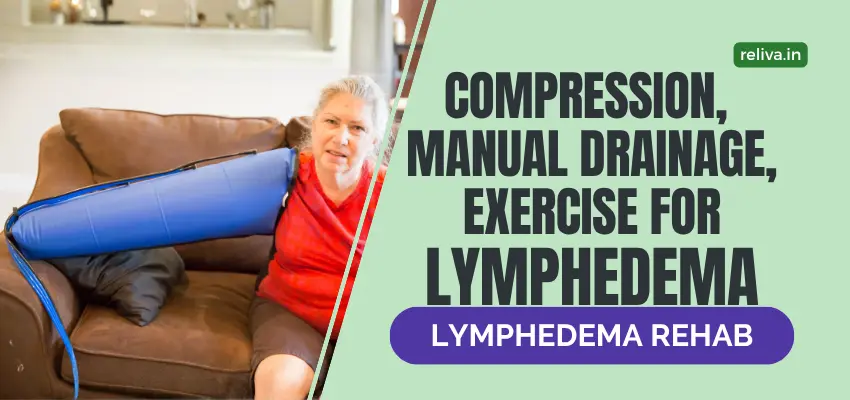
Pneumatic compression machines are often used as an adjunct in lymphedema treatment physiotherapy to improve fluid movement and support long-term management.
How it works: A pneumatic compression machine uses an inflatable sleeve with multiple chambers that apply sequential pressure along the limb.
This method:
- Promotes directional lymph flow
- Reduces fluid stagnation
- Acts as an adjunct to manual therapy
It is particularly useful in home-care programs when guided correctly, ensuring consistency in treatment.
Using Compression the Right Way Matters
Correct pressure, fit, and usage make a significant difference in results. A physiotherapist can guide you on the right compression approach for your condition.
👉 Get Personalised Compression Guidance
Exercise Therapy for Lymphedema
Exercise is a cornerstone of lymphedema management and is often misunderstood. When prescribed correctly, it does not worsen swelling, in fact, it enhances lymphatic drainage.
Breathing Exercises
Deep diaphragmatic breathing plays a vital role in stimulating lymph flow. Changes in thoracic pressure during breathing act as a natural pump for lymphatic circulation.
Benefits include:
- Improved central lymphatic drainage
- Relaxation and stress reduction
- Better oxygen delivery
Mobility Exercises
Gentle range-of-motion exercises help maintain joint flexibility and reduce stiffness, especially after surgery.
They:
- Encourage fluid movement
- Prevent joint restriction
- Improve limb usability
These are usually started early in rehabilitation.
Strengthening Exercises
Progressive strengthening exercises activate muscles, which act as pumps for lymphatic flow.
Key principles:
- Start with low resistance
- Progress gradually
- Monitor for any increase in swelling
Strength training improves both function and confidence in using the affected limb.

Functional Training
Functional exercises mimic real-life activities such as reaching, lifting, or walking.
They help:
- Restore independence
- Improve coordination
- Support return to daily routines and work
These are tailored based on the patient’s lifestyle and goals.
In post-surgical cases such as breast cancer, lymphedema physiotherapy after breast cancer focuses on combining exercise with compression and manual techniques for better long-term control.
Not Sure Which Exercises Are Safe for You?
The right exercises can improve lymphatic circulation and function, but they need to be tailored to your stage and symptoms.
👉 Start a Guided Lymphedema Exercise Program
Complete Decongestive Therapy (CDT)
Complete Decongestive Therapy (CDT) is considered the gold standard approach in lymphedema management. It is a structured treatment method that combines multiple techniques to reduce swelling and maintain long-term control.
CDT works by improving lymphatic drainage, preventing fluid re-accumulation, and supporting overall limb function. It is typically carried out in two phases: an intensive phase focused on reducing swelling, followed by a maintenance phase aimed at sustaining results through compression, exercise, and self-care.
By combining different therapies, CDT provides a more effective and long-lasting approach compared to using a single treatment method alone.
The 4 Pillars of CDT
1. Manual Lymphatic Drainage (MLD)
Specialized, very gentle skin massage by a trained therapist. NOT regular massage. Light, rhythmic, circular strokes starting at neck/collarbone, then moving toward swelling. Strokes are so light they don’t cause redness.
2. Compression Therapy
Bandages or garments that squeeze the limb to stop fluid re-accumulating.
Bandages applied by lymphedema therapist after MLD. Feels tight but lets muscles pump and improve lymphatic circulation.
3. Decongestive exercises
Specific movements done while wearing compression garments or bandages are prescribed by the Physiotherapist.
4. Skin and nail care
Proper skin care regime is prescribed to prevent infections and skin cracks in the arm for the limb and to prevent infections like cellulitis.
CDT is typically delivered in two phases:
- Intensive Phase – Focused on reducing swelling
- Maintenance Phase – Focused on sustaining results
Why Combination Works Best in Therapy?
Oncological physiotherapy rehab experts at ReLiva firmly believe that each component of CDT complements the others:
- MLD mobilises fluid
- Compression prevents its return
- Exercise enhances circulation
- Skin care prevents complications
Dr Priyal Parekh (PT), Oncological physiotherapist in ReLiva Vadodara quips, “This integrated approach ensures both immediate relief and long-term management.” The specific treatment approach may vary depending on the stages of lymphedema.
Role of Physiotherapist in Treatment Planning
A physiotherapist plays a central role in guiding lymphedema rehabilitation. Treatment is never one-size-fits-all and requires careful assessment.
The physiotherapist:
- Assesses severity, stage, and underlying cause
- Designs a personalised rehabilitation plan
- Selects appropriate modalities and intensity
- Educates patients on self-care techniques
- Monitors progress and modifies treatment
Dr Priyanka Tyagi (PT), Clinical head of the team at ReLiva Physiotherapy & Rehab adds, “Patient education is a key part of therapy at ReLiva, as long-term management depends on consistency and correct technique.”
Safety Guidelines During Treatment
Safe management is essential to avoid complications and ensure steady progress.
Important precautions include:
- Avoiding aggressive or deep massage techniques
- Monitoring for infection signs like redness or warmth
- Maintaining proper skin hygiene
- Using compression as prescribed
- Avoiding tight clothing or external pressure
- Progressing exercises gradually
Any sudden change in swelling, pain, or skin condition should be reported to a physiotherapist immediately.
Expected Outcomes of Physiotherapy for Lymphedema:
With consistent and structured physiotherapy, patients can expect noticeable improvements over time.
Outcomes include:
- Reduction in swelling and limb size
- Improved mobility and joint function
- Decreased heaviness and discomfort
- Better participation in daily activities
- Reduced risk of infections and complications
While lymphedema is a long-term condition, proper management allows individuals to lead active and independent lives.

FAQs
1. Can lymphedema be cured completely?
Ans. Lymphedema cannot be completely cured, but it can be effectively managed with structured lymphedema treatment physiotherapy. With consistent care, including compression, manual lymphatic drainage physiotherapy, and exercise, swelling can be controlled and daily function significantly improved.
2. How often should Manual Lymphatic Drainage be done?
Ans. The frequency of manual lymphatic drainage physiotherapy depends on the stage and severity of swelling. During the intensive phase, it may be recommended daily, while in maintenance, sessions are spaced out and combined with self-care techniques taught by the physiotherapist.
3. Are compression garments necessary for long-term management?
Ans. Yes, compression garments play a vital role in maintaining results achieved through therapy. At ReLiva Physiotherapy & Rehab, physiotherapists guide proper selection and usage to ensure optimal pressure, comfort, and long-term swelling control as part of lymphedema management.
4. Is exercise safe for individuals with lymphedema?
Ans. Exercise is not only safe but essential when done correctly. A physiotherapist designs a gradual program including mobility, strengthening, and breathing exercises to support lymph flow, improve function, and reduce the risk of worsening swelling.
5. Can a pneumatic compression machine be used at home?
Ans. A pneumatic compression machine can be used at home under proper guidance. At ReLiva Physiotherapy & Rehab, patients are trained on safe usage, pressure settings, and duration to ensure it complements manual therapy and compression without causing complications.
Comprehensive Lymphedema Care, Guided by Experts
Effective lymphedema management requires the right combination of manual therapy, compression, and exercise. With expert physiotherapy, you can reduce swelling, improve movement, and maintain long-term control.
Begin a structured lymphedema treatment plan designed for your condition.
……….
This post has been reviewed by physiotherapist Aryasree. Dr. Aryasree (PT) is a physiotherapist at ReLiva Kozhikode with specialized expertise in cancer rehabilitation. Certified in lymphedema therapy, she focuses on post-operative recovery, pelvic floor therapy, lymphedema management, and survivorship care. Through evidence-based interventions, she enhances functional outcomes and quality of life, contributing to multidisciplinary oncology teams with patient-centered rehabilitation strategies that empower individuals to recover safely and live with confidence.
…………..

