

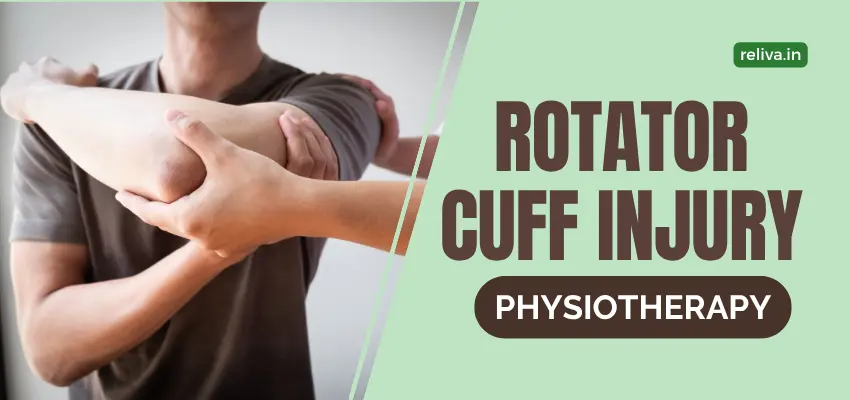

Pain when lifting your arm, weakness while carrying a bag, or shoulder pain that wakes you at night can all be signs of a rotator cuff injury. But a rotator cuff injury does not always mean a complete tear or surgery.
A rotator cuff injury can cause shoulder pain, weakness, difficulty lifting the arm and night discomfort. Treatment depends on whether the problem is tendinopathy, a partial tear or a complete tear. Many rotator cuff injuries improve with physiotherapy, while some significant tears may require specialist assessment or surgery.
A rotator cuff injury is one of the most common causes of shoulder pain, affecting everything from lifting a cup of tea to reaching for a shelf overhead. Whether it’s a mild strain from an awkward gym session or a genuine tear from a fall, understanding what’s happening in your shoulder is the first step toward proper rotator cuff injury treatment and a full recovery. This page covers the symptoms, causes, and rotator cuff rehabilitation options available, so you know exactly what to expect and when to seek help.
Understanding Rotator Cuff Injury
What Is the Rotator Cuff?
The rotator cuff is a group of four muscles and tendons that wrap around the shoulder joint, holding the arm bone securely in its socket while allowing a wide range of movement. It’s what lets you lift your arm overhead, rotate it, and carry weight without the joint slipping out of place.
Rotator Cuff Injury vs Rotator Cuff Tear
Rotator cuff injury is a broad term that describes damage or problems affecting the rotator cuff tendons or muscles. It can include irritation, inflammation, tendinopathy, partial tears or complete tears.
A rotator cuff tear is therefore one specific type of rotator cuff injury. A tear may be partial, where the tendon is damaged but not completely separated, or complete, where the tendon is torn through.
Not every rotator cuff injury is a tear, and not every rotator cuff problem requires surgery. Treatment depends on the type and severity of the injury, your symptoms, shoulder function and how you respond to rehabilitation.

How Does a Rotator Cuff Injury Occur?
A rotator cuff injury happens when one or more of these tendons becomes irritated, partially torn, or fully torn. This can develop gradually through repetitive strain and wear, or suddenly from an injury like a fall or a forceful pull on the arm. Injuries range from mild inflammation, known as tendinitis, to a partial tear, and finally to a complete rotator cuff tear where the tendon separates entirely from the bone. The right rotator cuff tear treatment depends heavily on which of these you’re dealing with, which is why an accurate assessment matters more than guessing based on symptoms alone.
Rotator Cuff Injury Symptoms
Recognising the symptoms early makes a real difference to how quickly you recover, since untreated rotator cuff pain tends to change the way you naturally move your shoulder, which can create secondary stiffness and weakness over time.
Pain While Lifting the Arm
One of the earliest signs is pain when lifting the arm sideways or forward.
Pain at Night
Many people with a rotator cuff injury notice pain worsens at night, especially when lying on the affected shoulder, which can disturb sleep.
Weakness in the Shoulder
A noticeable loss of strength, such as difficulty carrying grocery bags or pushing a door open, is a common symptom of rotator cuff pain.
Difficulty Reaching Overhead
Everyday tasks like reaching into a cupboard or fastening a seatbelt can become noticeably harder.
Clicking or Catching Sensation
Some people feel or hear a clicking, catching, or grinding sensation when moving the shoulder, which often points to tendon involvement.
Pain or Weakness when Rotating the Arm
You may experience pain or weakness when turning the arm inward or outward, particularly during activities such as reaching, lifting or throwing.
Causes and Risk Factors
Rotator cuff injuries develop for a range of reasons, from gradual wear to a single traumatic event.
Age-Related Wear and Tear
As tendons age, they naturally lose some of their strength and elasticity, making tears more common after the age of 40.
Sports Injuries
Sports involving repeated overhead arm movement place significant strain on the rotator cuff. In India, this is particularly common among badminton and cricket players, especially fast bowlers and those who play frequent smashes or overhead shots.
Gym-Related Injuries
Heavy overhead pressing, incorrect lifting technique, or sudden increases in weight can overload the rotator cuff tendons.
Repetitive Overhead Work
Jobs or hobbies that involve frequent overhead reaching, such as painting or certain manual trades, can gradually wear down the tendons.
Sudden Trauma or Falls
A fall onto an outstretched arm or a sudden jerk of the shoulder, common in falls, sports injuries, road accidents or sudden forceful pulling of the arm, can cause an acute rotator cuff tear.
Rotator Cuff Tear vs Other Shoulder Conditions
| Condition | Key Feature | How It Differs from Rotator Cuff Injury |
|---|---|---|
| Rotator cuff injury | Shoulder Pain accompanied with weakness | Active movement may be painful/weak |
| Progressive stiffness and loss of movement in all directions | Rotator cuff injury usually retains passive movement but has weakness | |
| Pain with overhead movement due to tendon pinching | Often an early stage or contributing factor to rotator cuff injury | |
| Joint stiffness and pain, often with age | Involves Joint-related changes (not tendons) | |
| Inflammation of the fluid-filled sac cushioning the joint | Causes similar pain but typically without significant weakness |
Shoulder pain has several possible causes, and it’s easy to confuse a rotator cuff injury with other conditions that produce similar symptoms but need very different treatment approaches.The overlap between these conditions is exactly why self-diagnosis can be misleading. Frozen shoulder, for instance, tends to restrict movement in every direction, even when someone else tries to move your arm for you, while a rotator cuff injury usually allows that same passive movement even though active lifting is painful and weak.
Shoulder impingement often sits on the same spectrum as a rotator cuff injury. A physiotherapist can usually distinguish between these through a focused clinical assessment and a short course of rotator cuff tear physiotherapy, which is far more reliable than guessing based on symptoms alone.
How Is a Rotator Cuff Injury Diagnosed?
Clinical Assessment
Diagnosis typically starts with a detailed history of how the pain began and how it behaves with different movements.
Range of Movement
Testing how far and how freely the shoulder moves helps identify which structures are affected.
Strength Testing
Specific tests that isolate each rotator cuff muscle help determine the extent and location of the injury.
When Is MRI Needed?
Imaging isn’t usually the first step. It’s generally reserved for cases where symptoms don’t improve with initial treatment or when a significant tear is suspected.
Can a rotator cuff tear be diagnosed without an MRI?
Yes. A rotator cuff tear can often be suspected through a clinical assessment of your symptoms, shoulder movement, strength and function. An MRI may be recommended when the diagnosis is unclear, a significant tear is suspected, or imaging is likely to change the treatment plan.
For more guidance, see Do I Need an MRI for Shoulder Pain? (coming soon)
Physiotherapy Treatment for Rotator Cuff Injury
Physiotherapy is an important first-line treatment for many rotator cuff problems, particularly when symptoms can be managed conservatively. This is for good reason, as it addresses both the symptoms and the underlying mechanics causing them, rather than simply masking pain.
Pain Relief
Early treatment focuses on calming irritated tissue through manual therapy, activity modification, and guided movement, helping reduce pain without unnecessary rest. Complete rest is rarely the answer, since prolonged inactivity can lead to stiffness and further weakness in an already compromised shoulder.
Restoring Shoulder Movement
Gentle, progressive exercises help restore full range of motion that may have been lost due to pain or protective stiffness. This stage is carefully paced, since pushing too hard too soon can aggravate an already sensitive tendon.
Strengthening the Rotator Cuff
Progressive strengthening exercises for shoulder rebuild the strength of the injured tendons and surrounding muscles, which is central to long-term recovery. This is often the longest phase of rotator cuff rehabilitation, since tendons take time to adapt and strengthen safely.
Improving Shoulder Blade and Shoulder Movement
Correcting how the shoulder blade and joint move together reduces strain on the rotator cuff and helps prevent re-injury. Many people don’t realise that poor shoulder blade control, rather than the tendon itself, is often what’s driving repeated flare-ups.
Return to Work and Sports
A structured, staged plan helps you safely return to work tasks, gym training, or sport, rather than jumping back in too soon and risking a setback. For athletes, this includes sport-specific drills that gradually reintroduce the overhead movements involved in badminton, cricket, or swimming.
Treatment typically combines manual therapy, targeted exercise therapy, progressive strengthening, activity modification, and patient education, tailored to your specific tear type, symptoms, and goals, rather than a one-size-fits-all programme. At ReLiva Physiotherapy and Rehab, every rotator cuff physiotherapy plan is built around the individual’s daily demands, whether that’s a desk job, an active sport, or general day-to-day function.
Could Physiotherapy Help Your Shoulder?
Persistent shoulder pain, weakness or difficulty lifting your arm does not always mean you need surgery. A physiotherapy assessment can help identify the likely cause of your symptoms and determine whether a structured rehabilitation programme is appropriate.
Get your shoulder assessed by a ReLiva physiotherapist and understand your treatment options.
How ReLiva Approaches Rotator Cuff Rehabilitation?
At ReLiva, rotator cuff rehabilitation begins with a personalised assessment of your pain, shoulder movement, strength and functional limitations. We then identify factors contributing to your symptoms and build a rehabilitation plan around your individual needs.
The approach typically progresses through:
Assess → Identify contributing factors → Reduce pain → Restore movement → Progressive strengthening → Return to work or sport
Treatment may include targeted exercises, movement retraining, activity modification and progressive strengthening. Where appropriate, rehabilitation can also support sports injuries, post-operative recovery and return-to-work or return-to-sport planning.
Whether you are managing a rotator cuff injury without surgery or recovering after a repair, rehabilitation is focused on gradually restoring movement, strength and confidence in using the shoulder.
The goal is to help you regain useful shoulder function for everyday activities—from lifting a child or reaching a kitchen shelf to carrying shopping bags or returning to your sport—while progressing safely through rehabilitation.
Rotator Cuff Physiotherapy vs Surgery
This is one of the most common questions patients ask, and the answer depends on the type and severity of the injury.
When Physiotherapy Works Well?
For mild to moderate injuries, and even many partial tears, physiotherapy is often highly effective and is usually recommended as the first approach.
Can Physiotherapy Reduce the Need for Surgery?
In many cases, yes. A well-structured rotator cuff physiotherapy programme can restore function and reduce pain enough that surgery isn’t necessary, though this depends heavily on the individual case and tear characteristics. This isn’t just clinical opinion, a randomised controlled trial comparing surgical repair with physiotherapy for small, acute rotator cuff tears found no significant difference in outcomes between the two groups at 12 months (ScienceDirect, 2020). A separate systematic review and meta-analysis comparing conservative management with surgical repair in degenerative tears similarly found that while surgery showed a statistical edge on some outcome scores, the difference did not reach a clinically meaningful threshold (PubMed, 2021).
Physiotherapy can often improve pain and function and may reduce the need for surgery in appropriately selected patients.
When Surgery May Be Needed?
Surgery decisions depend on age, injury mechanism, weakness, tear characteristics, shoulder function, imaging findings, individual goals and response to appropriate non-surgical treatment.
Rehabilitation After Rotator Cuff Surgery
Physiotherapy is also an important part of recovery after rotator cuff repair. Rehabilitation typically progresses in phases, beginning with protecting the repaired tendon and gradually restoring movement before progressing to strengthening and functional activities. Your physiotherapist will guide the progression according to your surgical protocol and recovery.
A real patient experience of physiotherapy for post surgical physiotherapy in Thane illustrates the importance of this rehabilitation journey:
Mr Prakash Savardekar says, “As an outpatient undergoing treatment for lower back pain and post-surgical rehabilitation following my rotator cuff repair, I received exceptional care from Physiotherapist Dr. Khyati. Her patience, technical expertise, and ability to adapt my rehabilitation program based on my progress made a significant difference in my recovery. I truly appreciate her sincere efforts, guidance, and constant encouragement throughout my rehabilitation journey. I highly recommend Physiotherapist Dr. Khyati to anyone seeking expert care for lower back pain or post-surgical shoulder rehabilitation.”
Rotator Cuff Recovery Timeline
Recovery varies depending on the type and severity of the injury, treatment approach, age and activity demands.
- Mild rotator cuff-related pain or strain: Symptoms may improve over several weeks with appropriate activity modification and rehabilitation.
- Partial tears: Recovery commonly requires progressive rehabilitation over several weeks to months.
- Full-thickness tears managed without surgery: Pain and function may improve with rehabilitation, but recovery and longer-term outcomes vary considerably.
- After rotator cuff repair: Rehabilitation is usually measured over several months, with strengthening and return to higher-level activities progressed according to the surgeon’s protocol.
Minor Injuries
Minor strains often respond well within a few weeks of appropriate physiotherapy.
Partial Tears
Partial tears usually need a more structured, longer rehabilitation programme, often spanning a few months.
After Surgery
Post-surgical recovery is more gradual, with a phased return to strength and function guided closely by a physiotherapist.
Rotator Cuff Injury Across Different Age Groups
Rotator cuff problems can affect people at different stages of life, but the common causes, activity demands and rehabilitation goals can vary with age.
Young Athletes
In younger athletes, rotator cuff injuries are often related to overuse in sports like badminton, swimming, or cricket, and usually respond well to physiotherapy focused on correcting technique alongside strengthening.
Working Professionals
Desk-based professionals may develop rotator cuff issues from poor posture combined with occasional gym strain, requiring both mechanical correction and strengthening to prevent recurring flare-ups during long work hours.
Adults Over 40
With age, degenerative changes in the rotator cuff become more common. Even when a small tear is present, physiotherapy can help maintain shoulder strength, movement and function. Not every tear requires surgical repair.
Older Adults
In older adults, treatment often focuses on preserving independence and daily function, with realistic, gradual strengthening goals that respect other joint or health considerations.

Frequently Asked Questions
Can a rotator cuff tear heal without surgery?
Yes, many rotator cuff tears can be managed without surgery, particularly partial or degenerative tears. Physiotherapy can help reduce pain, restore movement and improve shoulder strength and function. Whether surgery is appropriate depends on factors such as the type and size of the tear, weakness, symptoms, activity demands and response to rehabilitation.
Can physiotherapy repair a rotator cuff tear?
Physiotherapy cannot physically reattach a torn tendon. However, it can improve shoulder movement, strengthen the surrounding muscles and improve shoulder function. Many people can achieve good pain relief and useful function without surgical repair, depending on the type and severity of the tear.
How long does physiotherapy take for a rotator cuff injury?
Recovery varies depending on the injury, symptoms, activity level and treatment approach. Some minor injuries may improve within a few weeks, while partial tears and more significant problems may require several months of progressive rehabilitation. Your physiotherapist can provide a more individualised recovery estimate after assessment.
Can I exercise or go to the gym with a rotator cuff injury?
In many cases, you can continue exercising with appropriate modifications. Exercises that significantly increase pain, particularly heavy or repetitive overhead movements, may need to be reduced or temporarily avoided. A physiotherapist can help you modify your training and progressively rebuild shoulder strength.
What exercises should I avoid with a rotator cuff injury?
There is no single list of exercises that everyone with a rotator cuff injury must avoid. However, heavy overhead lifting, painful movements and exercises that repeatedly aggravate your symptoms may need modification. Exercise selection should depend on your injury, symptoms, strength and stage of rehabilitation.
Can a rotator cuff tear be diagnosed without an MRI?
Yes. A rotator cuff tear can often be suspected through a clinical assessment of your symptoms, shoulder movement, strength and function. An MRI may be recommended when the diagnosis is unclear, a significant tear is suspected or imaging is likely to change the treatment plan.
Will a rotator cuff tear get worse if left untreated?
A rotator cuff tear does not necessarily become worse simply because it is not treated surgically. However, persistent pain, weakness or loss of function should not be ignored. Early assessment can help identify the cause of symptoms and determine whether physiotherapy, activity modification, imaging or specialist care is appropriate.
How do I know if I have a rotator cuff tear?
Common signs include shoulder pain, weakness when lifting or rotating the arm, difficulty reaching overhead and pain that may disturb sleep. These symptoms can also occur with other shoulder conditions, so a clinical assessment is needed to determine whether a rotator cuff tear is likely.
When Should You See a Physiotherapist for Rotator Cuff Injury?
Consider seeing a physiotherapist if shoulder pain is persistent, affects sleep or daily activities, causes noticeable weakness, or makes it difficult to lift or use your arm normally. A proper assessment can help identify whether the problem is related to the rotator cuff and whether physiotherapy, further investigation or specialist referral is appropriate.
What Happens at Your First Assessment session at ReLiva?
At ReLiva Physiotherapy & rehab, your first assessment starts with understanding your symptoms, activity demands and goals. Your physiotherapist will assess your shoulder movement, strength and function and look for factors contributing to your pain. Based on these findings, you will receive a personalised rehabilitation plan, including guidance on pain management, exercises and progression.
If imaging or specialist assessment appears necessary, this can also be discussed as part of your care plan.
Book Rotator Cuff Physiotherapy
If rotator cuff pain or weakness is affecting your work, daily activities or sport, ReLiva can help you understand the problem and work towards restoring shoulder function.
Whether you are managing an injury without surgery or recovering after rotator cuff repair, our physiotherapy approach is tailored to your symptoms, needs and rehabilitation goals.
Book a rotator cuff physiotherapy assessment with ReLiva Physiotherapy & Rehab and take the first step towards getting your shoulder moving and functioning better.
….
This article has been reviewed by Dr Chetna Jadhav.
Dr. Chetna Jadhav (PT) is an experienced musculoskeletal physiotherapist in Mumbai, with advanced training in manual therapy and evidence-based rehabilitation. She specializes in pain management, postural correction, and functional recovery using dry needling, cupping, and K-taping and advanced physiotherapy techniques like Mc Kenzie, Mulligan’s, Myofascial Release, MET (Muscle Energy Technique). Dr. Chetna’s personalized, science-backed treatment plans focus on restoring strength, mobility, and long-term musculoskeletal health.
…

