

Medically reviewed by Dr. Sayali Muley (PT) – Updated July, 2026.
Effective knee arthritis treatment is crucial, as knee arthritis is one of the most common causes of long-term joint pain and reduced mobility worldwide. While traditionally associated with ageing, it is increasingly seen in younger individuals due to sedentary lifestyles, prolonged sitting, reduced physical activity, previous knee injuries, poor posture, muscle weakness, repetitive joint load and rising obesity levels.
The knee joint plays a crucial role in almost every movement we perform, walking, climbing stairs, standing, bending, and even maintaining balance. When arthritis affects this joint, it doesn’t just cause pain, it impacts independence, confidence in movement, and overall quality of life.
Many individuals tend to rely only on painkillers or ignore early symptoms, which can lead to gradual worsening of the condition. However, early and structured intervention can significantly change outcomes.
This is where physiotherapy for knee arthritis becomes essential. Instead of offering temporary relief, physiotherapy focuses on long-term recovery by improving joint function, strengthening muscles, correcting movement patterns, and reducing stress on the knee.
According to the World Health Organization, musculoskeletal conditions such as osteoarthritis are among the leading contributors to disability globally, affecting mobility, independence, and the ability to perform daily activities.
What is the Best Treatment for Knee Arthritis?
Exercise-based orthopedic physiotherapy is considered a first-line treatment for knee osteoarthritis and is recommended by major international guidelines. It helps reduce pain, improve mobility, strengthen supporting muscles, and maintain daily function. Many people can manage symptoms successfully without surgery through a combination of exercise, lifestyle changes, and guided rehabilitation.
What is Knee Arthritis?
Knee arthritis is a condition where the protective cartilage in the knee joint gradually wears down over time. This cartilage normally allows smooth, pain-free movement by reducing friction between bones.
As the cartilage thins due to ageing, the joint loses its ability to distribute loads efficiently, resulting in increased stress on the bone underneath and tissues surrounding the joint causing typical bone-to-bone rub. This leads to pain, stiffness, inflammation, and reduced movement.
Over time, the joint may undergo further changes such as reduced joint space, formation of bony growths, and inflammation of surrounding tissues, making daily movements increasingly difficult.
Osteoarthritis is the most common form of knee arthritis. Learn more about osteoarthritis treatment and how physiotherapy helps manage symptoms.
Symptoms of Knee Arthritis
Knee arthritis symptoms often begin subtly and worsen gradually. Many individuals initially dismiss early signs such as mild stiffness or occasional discomfort, but over time, these symptoms can become persistent and significantly interfere with daily life.
Common symptoms include:
- Chronic knee pain that worsens with activity and may persist even at rest in advanced stages
- Morning stiffness or stiffness after long periods of inactivity
- Swelling and inflammation, especially after excessive use
- Reduced range of motion, making it difficult to fully bend or straighten the knee
- Grinding or cracking sounds (crepitus) due to bone-on-bone contact
- Joint instability or weakness, leading to a feeling of the knee “giving way”
- Difficulty performing daily tasks such as climbing stairs, squatting, kneeling, or getting up from a seated position
In advanced stages, individuals may also experience:
- Visible joint deformity
- Significant reduction in mobility
- Pain even during rest or sleep
Studies maintain that Knee arthritis is highly prevalent in India, with studies suggesting that 22–39% of the population is affected by osteoarthritis, particularly among older adults and women.
On a global level, the World Health Organization reports that over 528 million people are living with osteoarthritis, with the knee being one of the most affected joints. The rising burden is closely linked to increased life expectancy, obesity, and physical inactivity.
Symptoms Unique to Knee Arthritis
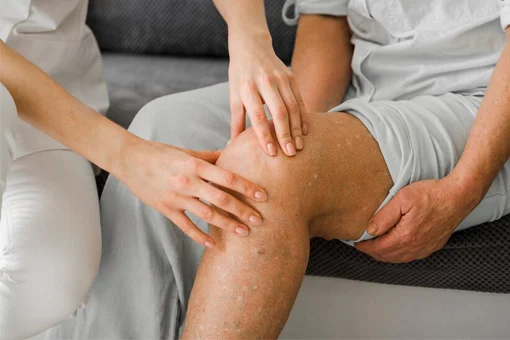
Knee arthritis doesn’t just cause pain, it affects how you move in daily life. Many symptoms are noticed during functional activities rather than at rest.
Common knee-specific symptoms include:
- Pain while walking, especially on uneven surfaces
- Difficulty climbing or descending stairs
- Pain when getting up from a chair
- Difficulty squatting or kneeling
- Knee stiffness after sitting for long periods
- Swelling around the knee joint
- Grinding or clicking sounds during movement
- A feeling of knee instability or “giving way”
These symptoms often worsen gradually and begin to interfere with routine activities.
How Knee Arthritis Affects Daily Activities
Walking
Walking may become slower and uncomfortable. You might notice pain after a short distance or feel the need to stop frequently.
Climbing Stairs
Stair climbing places extra load on the knee joint, often making this one of the earliest and most painful activities.
Sitting and Standing
Getting up from a seated position can be difficult due to stiffness and reduced muscle strength around the knee.
Squatting and Kneeling
These movements require deep knee bending, which becomes painful and restricted in arthritis.
Exercise and Sports
High-impact activities such as running or jumping may become difficult, leading many people to avoid exercise altogether, further worsening stiffness and weakness.
Knee Arthritis vs Normal Ageing
It’s important to understand the difference between normal ageing and arthritis:
|
Feature |
Normal Ageing |
Knee Arthritis |
|
Pain |
Mild discomfort occasionally after activity |
Persistent pain that may occur during walking, climbing stairs, or even at rest |
|
Stiffness |
Brief stiffness that improves quickly with movement |
Stiffness lasting longer, especially after rest or in the morning |
|
Mobility |
Minor changes in flexibility over time |
Reduced knee mobility that affects daily activities |
|
Daily Activities |
Usually able to perform routine activities comfortably |
Difficulty walking, climbing stairs, squatting, standing up, or prolonged standing |
|
Progression |
Changes occur gradually and often remain manageable |
Symptoms may worsen over time without appropriate treatment |
|
Need for Treatment |
General exercise and healthy habits are usually sufficient |
Often requires structured knee arthritis treatment and physiotherapy |
Key Takeaway:
Occasional stiffness or mild discomfort can be a normal part of ageing. However, persistent knee pain, ongoing stiffness, or difficulty walking and performing everyday activities may indicate knee arthritis. Early physiotherapy can help reduce pain, improve mobility, and support long-term joint health.
Can Physiotherapy Delay Knee Replacement?
In many cases, physiotherapy may help delay knee replacement surgery by reducing pain, improving strength, enhancing mobility, and supporting daily function. Early intervention is particularly effective for individuals with mild to moderate knee arthritis.
Physiotherapy Treatment for Knee Arthritis
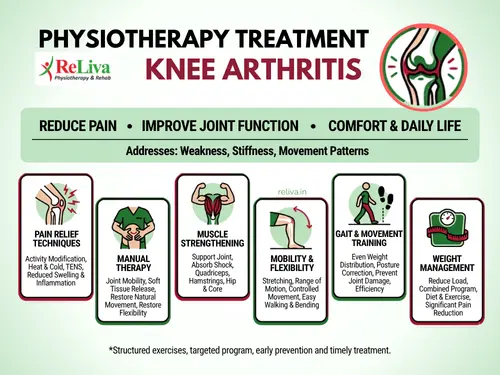
Physiotherapy for knee arthritis focuses on reducing pain, improving joint function, and helping you move comfortably in your daily life. Instead of just managing symptoms, it addresses the underlying issues such as muscle weakness, joint stiffness, and poor movement patterns.
A structured physiotherapy program can help you stay active, delay progression, and in many cases, avoid the need for surgery.
Pain Relief Techniques
Pain is often the primary concern in knee arthritis. Physiotherapy uses a combination of techniques to reduce discomfort and inflammation, including heat therapy, cold therapy, TENS (electrical stimulation) along with activity modification and exercise therapy.
These treatments help relax muscles, improve circulation, and reduce swelling, making it easier to begin movement and exercise safely.
Manual Therapy for Knee Arthritis
Manual therapy involves hands-on techniques performed by a physiotherapist to improve joint mobility and reduce stiffness. Gentle joint mobilisations and soft tissue release techniques help restore natural movement in the knee.
At ReLiva, physiotherapists often use manual therapy to help reduce pain and improve short-term mobility and flexibility in combination with exercise that helps to prepare joints for strengthening exercises.
Learn more about manual therapy for arthritis and how it can improve joint mobility and reduce stiffness.
Strengthening the Muscles Around the Knee
Strong muscles play a crucial role in supporting the knee joint. Weakness in the quadriceps, hamstrings, and surrounding muscles increases stress on the joint and worsens pain.
A targeted strengthening program focuses on:
- Quadriceps strengthening
- Hamstring activation
- Hip and glute strengthening
- Core stability
Improving muscle strength helps absorb shock, improve joint alignment, and reduce strain on the knee during daily activities.
Explore our guide to arthritis exercises to reduce pain for additional exercises that support joint health and mobility.
Improving Mobility and Flexibility
Stiffness is a common problem in knee arthritis. Physiotherapy includes guided exercises to improve range of motion and flexibility.
Stretching tight muscles and performing controlled movements helps restore smooth joint function, making activities like walking, sitting, and bending easier and more comfortable.
Gait and Movement Training
Incorrect walking patterns and movement habits can increase stress on the knee joint. Physiotherapists assess how you walk, stand, and move, and correct any imbalances.
Gait training helps distribute weight evenly, improve posture, and reduce unnecessary strain on the knee thereby improving movement efficiency. This plays a key role in long-term pain management and preventing further damage.
Weight Management Programs
Studies suggest that even a 5–10% reduction in body weight can significantly reduce knee pain and improve function in individuals who are overweight or obese. Weight loss can improve mobility by reducing the load on the knee joint, making daily activities easier. A combined structured exercise program with appropriate dietary modifications can help achieve better long-term outcomes in knee osteoarthritis.
Here’s what one of our patients shared about their recovery journey:
Jeyakumar G., who was dealing with right knee pain due to arthritis, shared that he experienced noticeable improvement with treatment at Reliva Physiotherapy & Rehab. He highlighted the effectiveness of the personalised exercise plan designed specifically for his arthritis condition, including a set of 12 exercises he continues to follow regularly. With consistent physiotherapy and guided care, he has seen positive progress, expressing gratitude for the structured treatment and support he received.
Struggling with knee pain or stiffness? A physiotherapy assessment can help identify the factors contributing to your symptoms and create a personalised treatment plan.
Knee Arthritis Treatment with Physiotherapy Exercises
Here is a video that demonstrates Knee arthritis exercises with a physiotherapist:
When is Knee Replacement Needed?
In advanced stages of knee arthritis, when conservative treatment is no longer effective, surgical options such as knee replacement may be considered.
This is typically recommended when:
- Pain is severe and persistent
- Mobility is significantly restricted
- Daily activities become difficult
- Joint damage is advanced
Even in surgical cases, structured post operative physiotherapy remains essential for preparing the joint prior to surgery and ensuring optimal recovery afterwards.
Take the Next Step Towards Pain-Free Movement
Knee arthritis can significantly impact your daily life, but with proper knee arthritis treatment approach, it is possible to manage symptoms effectively and stay active.
At ReLiva Physiotherapy & Rehab, we focus on personalised, evidence-based care to help you reduce pain, improve mobility, and regain confidence in movement.
Book physiotherapy for knee arthritis at ReLiva today and take the first step towards better mobility and reduced pain.
We offer:
- Personalised physiotherapy programs
- Expert assessment and treatment
- Home care physiotherapy services
- Detailed pain evaluation sessions
With a team of experienced physiotherapists and a patient-centric approach, ReLiva ensures that your recovery journey is safe, structured, and effective.
Early intervention can make a significant difference, don’t ignore your symptoms.

Frequently Asked Questions About Knee Arthritis
Can physiotherapy help knee arthritis?
Ans. Yes. Physiotherapy is one of the most effective treatments for reducing pain, improving mobility, and strengthening the knee joint. It focuses on addressing the root cause rather than just temporary relief.
Is walking good for knee arthritis?
Ans. Yes, walking is generally beneficial for knee arthritis. Regular, low-impact walking helps keep the joint mobile, reduces stiffness, improves muscle strength, and supports overall knee function. To avoid aggravating symptoms, walking should be introduced gradually and adjusted according to pain levels and individual tolerance.
Can knee arthritis be treated without surgery?
Ans. In many cases, yes. Structured physiotherapy, exercise, and lifestyle modifications can effectively manage symptoms. At ReLiva Physiotherapy & Rehab, non-surgical treatment plans are designed to help patients reduce pain and stay active.
What exercises are best for knee arthritis?
Ans. Strengthening, stretching, and low-impact exercises such as cycling and guided movement training are commonly recommended. Exercise programs should always be tailored to individual needs.
When should I consider knee replacement surgery?
Ans. Knee replacement may be considered when pain becomes severe and daily activities are significantly affected despite consistent treatment. ReLiva Physiotherapy & Rehab also supports patients with pre- and post-surgery rehabilitation for better recovery outcomes.
Can knee arthritis get worse if left untreated?
Ans. Yes. Without appropriate treatment, knee arthritis may gradually worsen, leading to increased pain, stiffness, reduced mobility, and greater difficulty performing everyday activities. Early physiotherapy can help slow progression and improve function.
Don’t Let Knee Arthritis Limit Your Mobility
Knee arthritis can make everyday activities like walking, climbing stairs, and getting up from a chair increasingly difficult. With the right physiotherapy approach, it is possible to reduce pain, improve mobility, and stay active for longer. Book a consultation with a ReLiva physiotherapist to start a personalised knee arthritis treatment plan tailored to your needs.
………………..
This article has been reviewed by physiotherapist Sayali Muley. Dr. Sayali Muley (PT) is a leading neuro physiotherapist in Pune, specializing in advanced neurological rehabilitation. With a BPT, MPT (Neuro), and international certification in Clinical Neurodynamics (NDS Australia), she brings global expertise to local care. Certified in dry needling and electro‑acupuncture, she is skilled in cupping therapy, K‑Taping, mirror therapy, myofascial release, gait training, and muscle energy techniques. Proficient in Brunnstrom, PNF, Bobath, CIMT, and MRP approaches, she helps patients with stroke, spinal cord injuries, and neurological disorders regain mobility, independence, and confidence
…..