



Medically reviewed by Dr. C. S. Prasath (PT) – Updated August, 2026.
Piriformis syndrome physiotherapy addresses one of the most commonly overlooked causes in musculoskeletal practices. It produces deep, persistent buttock pain that is frequently mistaken for Lumbar radiculopathy (sciatica) , spinal canal stenosis, leading to spinal investigations, unnecessary imaging, and treatments aimed at the wrong structure entirely.
Once correctly diagnosed, piriformis syndrome responds very well to physiotherapy. The right combination of manual therapy, muscle energy techniques ( MET), stretching, and progressive hip strengthening exercises resolves most cases without steroid injections or surgery.
Piriformis Syndrome: Quick Answers
What is Piriformis Syndrome?
Piriformis syndrome is a neuromuscular condition in which the piriformis muscle, a deep hip rotator sitting beneath the gluteal muscles, becomes tight, inflamed, or overactive, and irritates, compresses or entraps the sciatic nerve that runs close to or through it. It produces deep buttock pain, sometimes with tingling, numbness or aching down the back of the thigh.
Although Piriformis syndrome is one of the most common causes of deep buttock pain, but it is not the only one. Conditions such as lumbar radiculopathy (sciatica), sacroiliac joint dysfunction, and some not so popular names like gluteal tendinopathy, proximal hamstring tendinopathy, ischiofemoral impingement, vascular claudication, superior cluneal nerve entrapment, posterior femoral cutaneous nerve entrapment, and referred pain from the lower back can produce similar symptoms. Learn more about the common causes of buttock pain and how physiotherapy helps to identify the right treatment.
Can Physiotherapy Help Piriformis Syndrome?
Yes, and it is the primary recommended treatment. Physiotherapy directly addresses the overactive piriformis muscle through manual release techniques, targeted stretching, and hip strengthening exercises while also correcting the postural and movement factors that caused the problem. Most patients gradually improve within 4–8 weeks.
How Long Does Recovery Take?
Mild cases typically resolve in 4–6 weeks. Moderate cases particularly those with associated nerve symptoms may take 8–12 weeks. Chronic piriformis syndrome that has been present for months requires a longer programme. Starting treatment early consistently leads to faster recovery.
Does Piriformis Syndrome Go Away Without Surgery?
In almost all cases, yes. Surgical interventions is an extremely rare last resort, considered only after all conservative management has failed over an extended period. The overwhelming majority of piriformis syndrome cases are fully resolved through physiotherapy and rehabilitation or lifestyle modifications.
In this guide, you will find:
- What is Piriformis Syndrome?
- Symptoms of Piriformis Syndrome
- Causes of Piriformis Syndrome
- Piriformis Syndrome vs Sciatica
- How Physiotherapy Helps Piriformis Syndrome?
- Best Exercises for Piriformis Syndrome
- Recovery Timeline
- FAQs
What is Piriformis Syndrome?
Understanding the Piriformis Muscle
The piriformis is a small, pear-shaped muscle that originates at the front (anterior) surface of the sacrum and attaches to the top of the femur (thigh bone). Its primary role is to rotate the hip externally, turning the foot outward and to assist with hip abduction when the hip is flexed.
Despite its modest size, the piriformis sits at a critical anatomical crossroads. It lies deep beneath the gluteal muscles, directly over the path of the sciatic nerve making it uniquely positioned to become a source of both local buttock pain and nerve-related leg symptoms when it becomes dysfunctional.
How the Piriformis Muscle Irritates the Sciatic Nerve?
In some people, the sciatic nerve passes through or above the piriformis muscle rather than beneath it, making nerve irritation more likely.
Why Piriformis Syndrome Causes Buttock Pain?
The piriformis muscle itself, when irritated, may result in localized deep gluteal pain at the centre of the buttock. This represents a muscle pain not nerve-referred and is produced by palpating or contracting the muscle. The combination of direct muscle pain and adjacent nerve irritation is what gives piriformis syndrome its characteristic mixed presentation.

What Does Piriformis Syndrome Feel Like?
Deep Buttock Pain
The defining feature of piriformis syndrome is a deep, aching pain in the centre of one buttock. It is not felt across the lower back, nor primarily in the thigh it sits squarely within the deep gluteal region. Pressing deep into the centre of the buttock typically reproduces the pain exactly. In most cases it is always on one side ie. unilateral.
Pain While Sitting
Prolonged sitting is the most aggravating position for piriformis syndrome. Firm surfaces are particularly provocative because they compress the piriformis muscle directly from below. The pain tends to build over the sitting duration tolerable for the first 10–15 minutes, then progressively worsen. Many patients find they cannot longer sit through meetings, meals, or car journeys without discomfort.
Pain During Walking or Running
Walking is usually better tolerated than sitting position but moderate to brisk walking, and especially running, activates the piriformis repeatedly and can provoke or worsen symptoms. Runners with piriformis syndrome often notice the hip pain building after a consistent distance, the point at which accumulated muscle fatigue tips the piriformis into irritation.
Tingling or Numbness Down the Leg
When the sciatic nerve is sufficiently compressed or irritated by Piriformis muscle, patients experience tingling, pins and needles, or numbness travelling from the buttock down the back of the thigh. This rarely extends below the knee in piriformis syndrome distinguishing it, in most cases, from lumbar disc-related sciatica where symptoms more commonly reach the calf or foot.
Pain While Climbing Stairs
Stair climbing requires the hip flexion, and the external rotators to engage, and the increased demand in gluteal muscles to work harder under single-leg load. All of these movements increase mechanical load in the piriformis muscle. Stair climbing pain that is specifically felt deep in the buttock region not in the knee joint , hip joint, or lower back is a consistent clinical feature of piriformis syndrome.
What Your Symptoms May Indicate?
|
Symptom |
Possible Interpretation |
|
Deep buttock pain |
Piriformis irritation |
|
Pain after sitting |
Muscle compression |
|
Tingling to thigh |
Sciatic nerve irritation or compression |
|
Pain below knee up to distal calf or foot |
Suspected lumbar radiculopathy (sciatica) |
|
Pain while climbing stairs |
Piriformis overload |
What Causes Piriformis Syndrome?
Prolonged Sitting
Sustained sitting places the piriformis muscle under continuous compressive load. Over hours of desk work or driving, the muscle accumulates tension, restricts blood flow, and becomes increasingly sensitised. This is the most common trigger in urban, desk-based populations.
Repetitive Running and Sports
Activities that involve repeated hip rotation, lateral movements, or impact loading running, football, tennis, cycling subject the piriformis to repetitive strain. A sudden increase in training volume or a change in running surface are common precipitating factors.
Muscle Weakness and Imbalance
Weak gluteal and hip muscles increase the workload on the piriformis muscle causing it to tighten (spasm) and eventually become painful.
Previous Back or Pelvic Problems
A history of lumbar disc problems, sacroiliac joint dysfunction, pelvic injury, labral tears, or pelvic instability, abnormal gait mechanism, can alter the loading and it may distribute around the hip joint. Compensatory movement patterns developed to protect one structure frequently result in overloading the piriformis over time.
Piriformis Syndrome vs Sciatica
Similar Symptoms
Both conditions produce buttock pain that may radiate into the back of the thigh. Both can cause tingling or numbness in the leg. Both worsen with prolonged sitting and certain hip movements. This overlap is precisely why piriformis syndrome is so frequently misdiagnosed as lumbar sciatica.
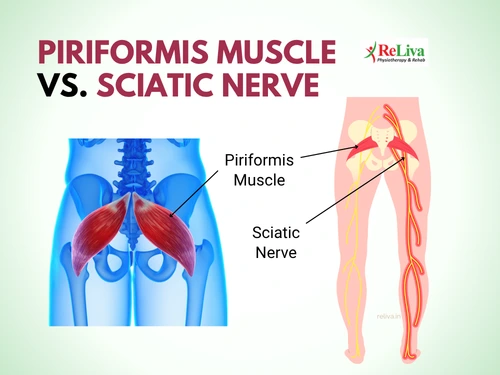
Key Differences between Piriformis Syndrome and Sciatica
|
Feature |
Piriformis Syndrome |
Lumbar Sciatica |
|---|---|---|
|
Source of nerve compression |
Piriformis muscle in the buttock |
Lumbar disc herniation or facet joint arthropathy |
|
Back pain |
Usually absent |
Often present |
|
Radiation |
Buttock to back of thigh; rarely below knee |
Can reach calf, foot, and toes |
|
Aggravated by |
Sitting, hip rotation, stair climbing |
Sitting, flexion, coughing/sneezing |
|
Provocation test |
FAIR test, hip rotation |
Straight leg raise, crossed SLR, and slump test |
|
Imaging |
Normal lumbar MRI |
May show disc or nerve root changes |
When Nerve Compression in the Lumbar Spine Is More Likely Cause for Buttock Pain?
Lumbar radiculopathy (sciatica) becomes the more likely diagnosis when:
- Pain consistently travels below the knee into the calf, foot or toes
- Back pain is a significant component of the presentation
- Neurological signs (reflex loss, significant weakness) are present
- Symptoms worsen with coughing, sneezing, or straining, and forward bending
When these features are absent and pain is centred in the buttock with hip provocation, piriformis syndrome is the more likely diagnosis.
Not Sure Whether It’s Piriformis Syndrome or Sciatica?
Both conditions can cause buttock pain and leg symptoms, but the treatment approach is different. A physiotherapy assessment can accurately identify the source of your pain.
Piriformis Syndrome vs Other Causes of Buttock Pain
Many conditions can cause buttock pain with similar symptoms. The table below highlights some of the key differences. A physiotherapy assessment is the most reliable way to identify the actual source of pain.
|
Condition |
Typical Pain Location |
Common Aggravating Activities |
Distinguishing Features |
|
Piriformis Syndrome |
Deep centre of one buttock |
Sitting, hip rotation, climbing stairs |
May cause tingling into the back of the thigh; back pain is usually absent |
|
Sciatica (Lumbar radiculopathy) |
Buttock with pain radiating down the leg |
Sitting, bending forward, coughing or sneezing |
Pain often travels below the knee into the calf or foot and is commonly associated with lower back pain |
|
Upper buttock near the pelvis |
Standing, walking, single-leg activities, stairs |
Pain is usually higher than piriformis pain and often worsens with prolonged standing |
|
|
Gluteal Tendinopathy |
Outer buttock and side of the hip |
Walking, climbing stairs, lying on the affected side |
Pain is felt more over the outer hip than the centre of the buttock |
|
Lumbar Referred Pain |
Dull Aching pain, poorly localised |
Prolonged standing or certain back movements |
Pain originates from the lower back but may be felt mainly in the buttock |
How Physiotherapy Helps Piriformis Syndrome
Reducing Muscle Tension
The first and most immediate goal is releasing the hypertonic piriformis muscle . Manual soft tissue therapy, trigger point release, and guided stretching techniques and muscle energy techniques reduce the muscle’s resting tension relieving both the direct muscle pain and the compression on the adjacent sciatic nerve.
Improving Hip Mobility
Restricted hip rotation ranges both internal and external rotators maintain the piriformis muscle in a shortened position, stressed position and prevents the joint from loading efficiently. Restoring hip mobility reduces the mechanical demand on the piriformis during everyday movement.
Relieving Pressure on the Sciatic Nerve
Neural mobilisation techniques gently restore the sciatic nerve’s ability to slide freely through the surrounding tissues. This reduces neural tension, improves conductivity, and alleviates the radiating tingling, numbness or aching that accompanies sciatic nerve irritation or entrapment.
Correcting Movement Patterns
Faulty movement patterns inward knee collapse during walking, asymmetric hip loading, and poor single-leg stability will be identified and corrected. Retraining these patterns prevents the recurrent piriformis overload that leads to repeated flare-ups.
Preventing Recurrence
Without addressing the root causes of gluteal muscle weakness, sitting habits, hip mobility deficits piriformis syndrome has a strong tendency to return. Physiotherapy builds the strength and awareness needed to stay recovered.
The ReLiva Piriformis Recovery Framework
Phase 1: Reduce Pain and Muscle Irritation
The immediate focus is pain relief and load management. Electrotherapy (IFT, ultrasound), manual soft tissue release on the piriformis muscle, and sitting modification guidance reduce the acute irritation. Patients also receive clear advice on positions and activities to avoid during this phase.
Phase 2: Restore Mobility
Once pain controlled, the programme introduces progressive piriformis stretching, hip rotational mobility work, and neural mobilisation techniques where nerve symptoms are present. The goal is to restore pain-free movement through the full range of daily activities sitting, walking, stair climbing, and driving.
Phase 3: Improve Hip and Core Strength
This phase targets the gluteal and core weakness that allowed the condition to develop. Progressive strengthening of the gluteus medius, gluteus maximus, and deep hip stabilisers builds the muscular support that takes load off the piriformis. Exercises are progressively loaded in line with recovery.
Phase 4: Return to Activity
Sport, exercise, and occupational demands are reintroduced gradually. Running mechanics, sport-specific movement patterns, and workstation ergonomics are reviewed and corrected. Patients leave with a self-management plan to maintain recovery and manage any future flare-ups early.
Physiotherapy Treatment Options
Studies have evaluated various physiotherapy techniques for Piriformis syndrome treatment. These include:
Manual Therapy
Hands-on mobilisation of the hip joint and sacroiliac joint, combined with targeted soft tissue techniques for the piriformis muscle and surrounding gluteal musculature. Manual therapy restores joint mechanics and reduces the compressive environment in which the piriformis operates.
Soft Tissue Release Techniques
Deep tissue massage and trigger point therapy applied directly to the piriformis reduces muscle hypertonicity and deactivates active myofascial trigger points, the localised knots of muscle tension that are often the direct source of deep buttock pain and referred leg symptoms.
Stretching Programmes
A progressive piriformis and hip rotator stretching programme from gentle supine stretches in the acute phase to active hip mobility work in rehabilitation systematically lengthens the piriformis and restores normal resting muscle tone.
Strengthening Exercises
Progressive eccentric loading of the gluteus medius, gluteus maximus, and hip external rotators rebalances the muscular environment around the hip. As these muscles become stronger and more endurance-capable, the burden on the piriformis decreases proportionally.
Postural Correction (Ergonomics)
Guidance on sitting position, chair setup, driving posture, and the elimination of crossing legs and wallet compression. These practical changes reduce the accumulated daily load on the piriformis that perpetuates symptoms between physiotherapy sessions.
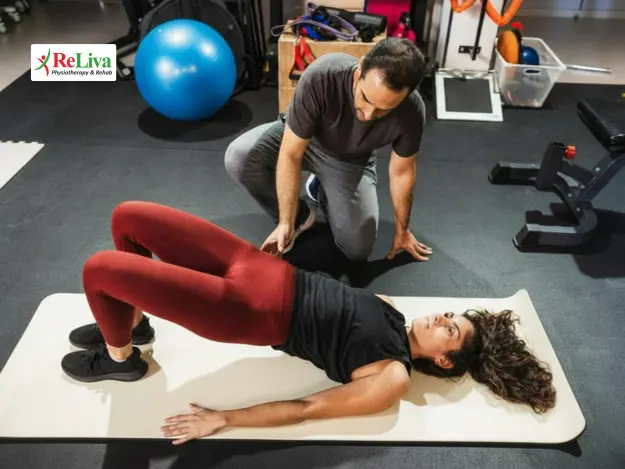
Best Exercises for Piriformis Syndrome
Figure-Four Stretch (Supine)
Lie on your back, cross the affected ankle over the opposite knee, and gently pull the thigh towards your chest until you feel a stretch deep in the buttock. Hold it for 20–30 seconds and repeat it 3 times. This is the most targeted and effective piriformis stretch for most people.
Seated Piriformis Stretch
Sit upright, place the affected ankle over the opposite knee, and lean forward until you feel a comfortable stretch in the buttock. Hold it for 20–30 seconds and repeat 3 times.Useful during the working day as a regular desk break.
90/90 Hip Stretch
Sit with both hips bent to 90 degrees and gently shift your weight from side to side. This improves hip rotation and reduces stiffness around the piriformis. Improves hip rotational mobility in both directions and reduces piriformis resting tension.
Clamshell
Lie on your side with knees bent and lift the top knee while keeping your feet together and maintain a stable pelvis, and avoid trunk rotation Perform 15–20 repetitions to strengthen the gluteus medius and reduce strain on the piriformis.
Glute Bridge
Lie on your back with knees bent and lift your hips (pelvis) by pressing through your heels or foot. Hold for 3–5 seconds and repeat 10–15 times to strengthen the gluteal muscles.
Bird Dog
From hands and knees (quadripod position) , slowly extend the opposite arm and leg while keeping your trunk stable. Perform 10 repetitions on each side to improve core and pelvic stability.
Physiotherapists may also incorporate specialized techniques such as seated sciatic nerve glides, which help improve nerve mobility while reducing tension, alongside a range of contemporary rehabilitation drills. These exercises are typically used in combination with core strengthening and stretching routines, tailored to each patient’s needs for effective piriformis syndrome management.
Exercises to Avoid
- Prolonged cross-legged sitting places sustained stretch-load on the piriformis under compression
- Deep hip external rotation under load (heavy sumo squats, wide-stance leg press) overloads the piriformis before sufficient recovery
- Cycling on narrow saddles direct piriformis compression during hip rotation
- Sprinting or hill running before rehabilitation is established repetitive high-load piriformis activation
- Stretching aggressively into pain the piriformis responds better to gentle, sustained stretching than to forced end-range loading
- During the symptomatic phase of piriformis syndrome, deep squats, lunges, heavy deadlifts, plyometric exercises, aggressive piriformis stretching should be avoided, as these activities may increase piriformis loading and sciatic nerve irritation.
Why Does Piriformis Syndrome Keep Coming Back?
Weak Gluteal Muscles
This is the most common reason for recurrence. Without adequate gluteal strength, the piriformis continues to compensate for under-performing muscles and the cycle of overload, inflammation, and irritation restarts. Strengthening the glutes is not optional; it is essential for lasting resolution.
Prolonged Sitting Habits
Returning to a full day of unsupported, unbroken sitting without ergonomic adjustment or movement breaks recreates the exact conditions that caused the problem. Sitting on a thick wallet can sometimes produce similar symptoms (Wallet Syndrome). Permanent changes to sitting habits are a non-negotiable part of sustained recovery.
Poor Running Mechanics
Runners who return to training without correcting the movement faults that caused piriformis overload inward knee collapse (dynamic knee valgus), contralateral hip drop, excessive hip adduction and excessive stride length, inadequate gluteal activation will reliably reproduce the condition. A biomechanical running assessment is warranted for anyone who runs regularly and has experienced piriformis syndrome more than once.
Incomplete Rehabilitation
Stopping physiotherapy as soon as pain resolves before strength and movement quality are fully restored is one of the most consistent predictors of recurrence. Pain relief and full recovery are not the same milestone.
How Long Does Piriformis Syndrome Take to Heal?
Mild Cases
Recent onset piriformis syndrome arising from a clear precipitating cause (a long flight, new running routine, extended sitting) typically responds within 4–6 weeks of consistent physiotherapy and activity modification.
Moderate Cases
Cases with nerve symptoms (tingling, numbness radiating leg pain) or a longer duration of symptoms generally take 8–12 weeks. Neural sensitisation takes longer to resolve than pure muscle pain, and the stretching and strengthening programme needs more time to produce meaningful structural change.
Chronic Cases
Piriformis syndrome present for more than 3 months particularly with a history of prior episodes may require 12–16 weeks or longer. Layers of compensatory movement habits, secondary muscle tightness, and neural sensitisation all need to be addressed systematically.
Factors Affecting Recovery
- Duration of symptoms before initiation of treatment
- Presence and severity of nerve symptoms
- Daily sitting demands and ability to modify them
- Poor Adherence to home stretching and strengthening exercises
- Whether the underlying gluteal muscle weakness is effectively addressed or not
- Concurrent hip, lumbar, or pelvic conditions

FAQs
Q. Is Piriformis Syndrome the Same as Sciatica?
Ans. No, though the symptoms can overlap significantly. True sciatica arises from nerve compression in the lumbar spine at the disc or facet joint level. Piriformis syndrome compresses the sciatic nerve in the buttock at the level of the piriformis muscle itself. Because the source of compression differs, the treatment approach also varies, which is why an accurate diagnosis at ReLiva Physiotherapy & Rehab is important.
Q. Can Walking Help Hip Pain due to Piriformis Syndrome?
Ans. Yes, moderate walking is generally beneficial. It keeps the hip mobile, offloads the sitting structures, and maintains circulation without placing high demand on the piriformis. Avoid brisk walking or running in the acute phase if it significantly aggravates symptoms. Short, comfortable walks are encouraged from the beginning of recovery.
Q. Is Sitting Bad for Piriformis Syndrome?
Ans. Prolonged, unsupported sitting is one of the primary aggravators of piriformis syndrome. Breaking sitting every 30–40 minutes, using a supportive chair, sitting with both feet flat on the floor (not crossed), and removing wallet compression all reduce the daily load on the piriformis significantly.
Q. Can Physiotherapy Cure Piriformis Syndrome?
Ans. For the vast majority of patients, yes. At ReLiva Physiotherapy & Rehab, physiotherapy addresses muscle tension, nerve irritation, hip weakness, and movement faults that drive the condition. Most patients achieve full resolution of symptoms, not just temporary pain relief, through a structured rehabilitation programme.
Q. Do I Need an MRI to Diagnose Piriformis Syndrome?
Ans. In most cases, no. Piriformis syndrome is a clinical diagnosis made through assessment, movement testing, and specific provocation tests. At ReLiva Physiotherapy & Rehab, MRI is primarily advised to rule out lumbar disc pathology when the presentation is unclear or when neurological signs are present.
Q. How Long Does Recovery Take?
Ans. Mild cases: 4–6 weeks. Moderate cases with nerve symptoms: 8–12 weeks. Chronic cases: 12–16 weeks or longer. Starting treatment early and completing a full physiotherapy programme at ReLiva Physiotherapy & Rehab, not just the pain relief phase, leads to the best outcomes.
Get the Right Diagnosis. Start the Right Treatment.
If you have persistent buttock pain, pain while sitting, or sciatica-like symptoms, don’t rely on self-diagnosis. A physiotherapy assessment can determine whether your symptoms are caused by piriformis syndrome or another condition and create a personalised recovery plan.
✔ Comprehensive assessment
✔ Individualised physiotherapy programme
✔ In-clinic and online consultations
….
This article has been reviewed by Dr. C. S. Prasath (PT).
Dr. Prasath (PT) is an experienced physiotherapist in Chennai with a multi-disciplinary approach, providing care across all types of physiotherapy needs. He routinely treats musculoskeletal issues such as back pain, spine problems, frozen shoulder, and various degenerative and post-traumatic orthopedic conditions.
…